Mailchimp
Not subscribed to OpsMatters Newsletter


“If you can’t measure it, you can’t improve it” …this quote by Peter Drucker and the philosophy behind it is a key driving force behind modern management and the introduction of BI solutions to support the scaling and increased complexity of businesses. Analytics tools were developed to enable metric measurement and business monitoring across large scale, complex systems and to enable continuous improvements of business performance.
An API allows two systems to communicate with each other. APIs (application programming interfaces) are magnificent things as they connect services and allow us to transfer data back and forth between managed systems. If you manage an API that internal and external users rely on, its failure won’t only impact you. It will affect all users and systems connected to the API. The connectivity and interdependencies create vulnerabilities for application programming interfaces.
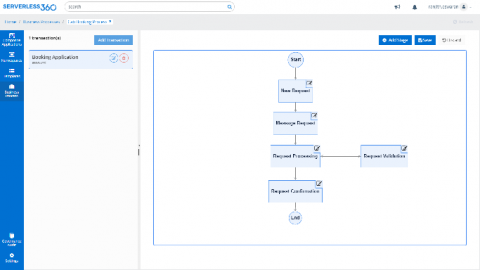
In the first part of this blog article, I introduced key concepts surrounding data ingestion for the industrial Internet of Things, the role and importance of metrics and self-services capabilities for shop floor personnel. So let's see how this looks in practice and how the knowledge of a process or control engineer can be turned into action.
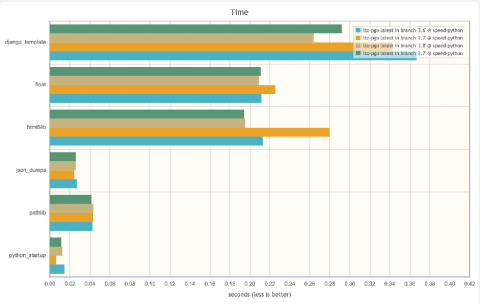
Python powers many applications we use in our day-to-day like Reddit, Instagram, Dropbox, and Spotify. The adoption of Python 3 has been a subject of debate in the Python community. While Python 3 has been out for more than a decade now, there wasn’t much incentive to migrate from the stable Python 2.7 in the earlier releases. If you’re still running on legacy python, it’s high time to migrate as it has reached the end of its life since Jan 2020.
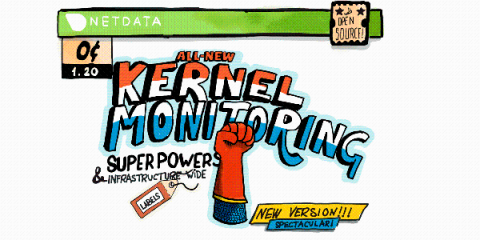
In Netdata’s first major release of 2020, we’re introducing two new features on the opposite ends of the monitoring spectrum. On one hand, we’re releasing an eBPF collector, which lets you collect, monitor, and visualize incredibly precise metrics straight from the Linux kernel. On the other, we added the ability to label agents to help you organize entire infrastructures and see every important piece of information about streaming nodes in one place.
Your application isn’t finished when you’ve closed the last if block and you lined up all the brackets. There’s a whole other world of testing, debugging, and optimization that you haven’t even touched yet. To help you more safely step into that complex phase of making your application even better, we’ve just released a brand-new eBPF collector in v1.20 of Netdata.