Mailchimp
Not subscribed to OpsMatters Newsletter


Microsoft Active Directory is a key component of the IT infrastructure of any organization that uses Microsoft Windows servers or desktops. Active Directory is responsible for managing users, their accounts and their access to individual computers, shared drivers, printers, servers and more. From a user’s perspective, Active Directory’s single sign-on capability ensures that users do not have to remember and use different passwords for different types of accesses.
Did you know that CloudFormation tags don’t automatically propagate to some resource types? Chief among these are CloudWatch log groups, which means you can’t include them in your cost monitoring (via cost allocation tags) among other things. The only way to tag CloudWatch log groups right now is via API calls. You can do this with the AWS SDK, or using the AWS CLI. This is hugely inconvenient!
Today I wanted to write about something that’s been on my mind for the last few months. The industry spends quite a bit of time talking about observability these days and something’s been, somewhat vaguely, bothering me about it. So about a week or so ago, I spent some time figuring out what was bothering me and had some insights I would like to share.
DevOpsDays Chicago had its first event in 2014, and 6 years later, this event is still going strong with about 500 people in attendance at the UIC Forum in downtown Chicago.
In the field of website optimisation a term which often crops up more than any other is that of ‘bounce rate’. When discussions about your website take place, you may have heard in passing that ‘your bounce rate is too high’, or that ‘we need to reduce the bounce rate to increase rankings’. But what do you do if your bounce rate is too high, and how would you go about reducing a high bounce rate?
School’s out for… Autumn? That’s right, while you were avoiding the back-to-school rush at Office Depot, cutting the crusts off PB&Js, and taking the layers out of mothballs (confession: I have never seen let alone used a single mothball), Serverless Summer School began winding down and is now over for the season. Until next year, school-themed Stackery livestreams!
We are happy to announce that Scout now integrates with the popular error monitoring solution, Honeybadger. This integration brings a similar feature set to our existing Rollbar, Sentry and Bugsnag integrations, and it allows you to see your errors and exceptions alongside your performance metrics all on a single page. So let’s take this opportunity to take a closer look at Honeybadger and see how you can get it setup within Scout in just a few minutes!
In this blog, we shall send observation frequencies in the bucket intervals chosen and aggregate those at the Prometheus back-end.
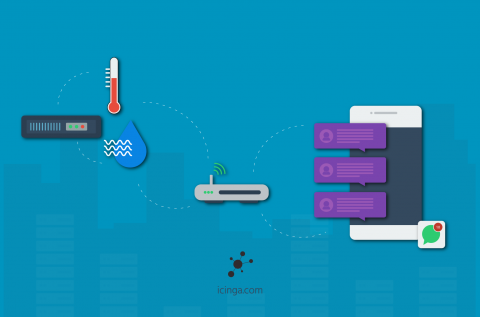
We are proud to announce that icinga.com is now also hosting integrations of hardware for monitoring environmental sensors and alerting via text message. The devices from the manufacturers listed on Icinga Integrations can easily be implemented into your Icinga monitoring by using plugins provided on Icinga Exchange.