Mailchimp
Not subscribed to OpsMatters Newsletter


Following the recent announcement of our partnership with Microsoft, Azure users can now monitor, troubleshoot, and secure their environments with a fully managed Azure-native ELK solution. However, If you want to set up the ELK Stack on Azure on your own this guide will help you get started.
Business Intelligence (BI) tools have taken the business world by storm. According to new research, over 80% of executives believe that tools such as advanced visualization, dashboards, and reporting are critical tools when it comes to parsing data. However, many end users aren’t bringing in those dashboards because they really use them, rather they are hoping to get a sense of security (incorrectly) that they will know everything about their business.
A Rails migration is a tool for changing an application’s database schema. Instead of managing SQL scripts, you define database changes in a domain-specific language (DSL). The code is database-independent, so you can easily move your app to a new platform. You can roll migrations back, and manage them alongside your application source code.
We are now happy to release the 6th update to the CFEngine 3.10 LTS series. This update comes with many important stability and performance improvements and is thus well worth the upgrade from an older version of 3.10 LTS.
Five worthy reads is a regular column on five noteworthy items we’ve discovered while researching trending and timeless topics. This week, we discuss the growing concern about ransomware-as-a-service among organisations across the globe.
Spark is known as a fast general-purpose cluster-computing framework for processing big data. In this post, we’re going to cover how Spark works under the hood and the things you need to know to be able to effectively perform distributing machine learning using PySpark. The post assumes basic familiarity with Python and the concepts of machine learning like regression, gradient descent, etc.
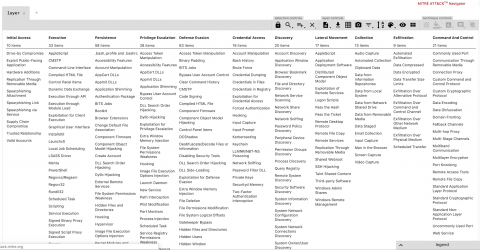
MITRE ATT&CK is a comprehensive knowledge base and complex framework of over 200 techniques that adversaries may use over the course of an attack. While MITRE’s full ATT&CK framework is publicly available, it can be characterized into 3 key elements.