Digital transformation is not just a buzzword. It’s real, it’s happening and there is no escaping it. IT teams strive to propel their businesses towards growth and innovation. That’s why 2019 is all about transformative projects in tech: CIOs are planning to increase their investments in cloud technology (67 per cent), AI and machine learning (54 per cent), and emerging tech vendors (41 per cent).
Let’s start with simple definitions. Time series data is largely what it sounds like – a stream of numerical data representing events that happen in sequence. One can analyze this data for any number of use cases, but here we will be focusing on two: forecasting and anomaly detection. First, you can use time series data to extrapolate the future.
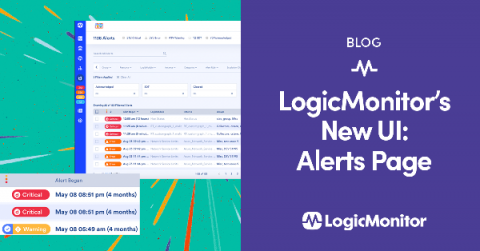
As discussed in a previous blog, here at LogicMonitor, we are in the process of rolling out a new user interface (UI) which is designed to streamline workflows, reduce clicks, and include powerful new features. So what’s new in the alerts page?
For your team to effectively respond to incidents, you need a shared, unambiguous incident definition so you can recognize when an incident has occurred and assign the appropriate severity. Definitions of an incident differ across teams, but whatever definition you use, identifying and monitoring key service level indicators (SLIs) can help you understand when your service is operating normally—and when its performance has degraded to the point where you need to trigger an incident.