Understanding and Modifying Thresholds
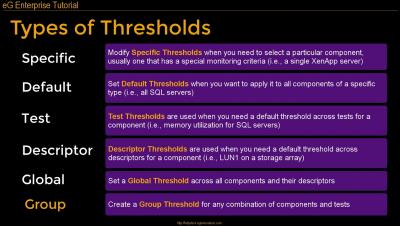
This tutorial is for eG Administrators and explains how to set and change thresholds in order to tune the environment. This way, your alerts are more meaningful.


Going on call and being awakened at a moment’s notice to put out fires when reputation and revenue are on the line is incredibly stressful. And with DevOps teams under increasing pressure to simultaneously release new products faster while ensuring reliability and quality, burnout is a rapidly growing problem. It’s why #HugOps and empathy are becoming so central to the culture of DevOps.
As enterprise cloud migrations accelerate, AWS continues to be a clear and compelling choice for digitally-transforming organizations. And while cloud-based operations are faster, innovative, reliable and cost-effective – they pose new, growing challenges for IT Ops, NOC and DevOps teams. With cloud-based operations, IT organizations now need to minimize outages and disruptions across different architectures and workloads.
Our founders created PagerDuty with the simple goal of making the lives of on-call developers better—and in doing that, we’ve championed a new way of working, inspired by the DevOps mindset. From that starting point, we’ve evolved our on-call product into a platform for real-time operations that enables our customers to grow from on-call rotations, to incident management and response, to full digital operations management.
When you first set up your Anodot account, you create alerts on the KPIs that matter most to you. Advanced alert configurations enable you to define various parameters so that you only get alerts that are important to you: selecting the metric, building a query, grouping the data by dimensions, selecting triggers and conditions, choosing who and where it should be sent to, and so on.
With AI analytics slated as the biggest disruptor to big data and analytics, data leaders are quickly integrating this capability into their data strategy. Itzik Feldman, data engineering manager at Atlassian, the enterprise software company responsible for Jira and Trello, recently credited Anodot with helping keep the company’s 3,000 employees in touch with product performance and customer experience.
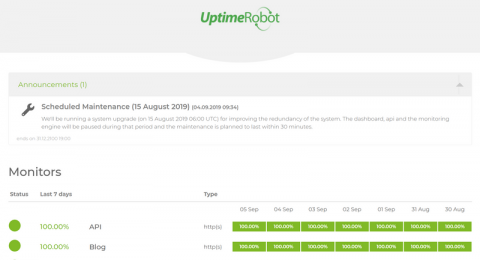
A status page is a very easy-to-setup, nice and automated way to share the status of the websites/servers with visitors, users and teammates. And, the ability to share additional info with users like current issues or an upcoming maintenance can only make it better.