Reducing support ticket burden with better outage visibility requires a shift from reactive support to proactive communication and centralized monitoring. Here's how StatusGator helps.
Most engineering teams don't have a data problem. They have an interpretation problem. Prometheus is running, logs are shipping to the aggregator, dashboards are green-and then a latency spike hits and the root cause takes 45 minutes to isolate. The data was there but the answer wasn't. That gap is where application performance monitoring (APM) operates. This article explores what APM adds to a modern observability stack, why relying on standalone tools leaves critical blind spots, and how teams can unify infrastructure data with application context for a complete operational picture.
We all know the pain and frustration associated with broken software. It's no secret that the internet is rife with broken links, slow pages, and broken shopping carts, often feeling like it's being held together with glue and duct tape. These issues aren't just causing frustration for customers; it costs businesses millions. According to the Consortium for Information and Software Quality, poor software quality cost US companies $2.08 trillion in 2020. Every interaction between a customer and your technology is an opportunity to build or destroy trust.
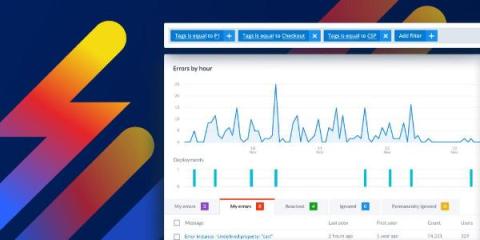
In the rapidly shifting world of financial technology (FinTech), acquiring and retaining new customers to achieve long-term business growth requires a proactive approach to user experience and application performance optimization. As FinTech companies compete against rivals to grow a user base and revolutionize how consumers manage their finances, they increasingly depend on data-driven insights to optimize their mobile applications and deliver exceptional user experiences. This is where application event analytics comes into play.
In a scenario where IT teams face growing pressure to deliver positive business outcomes, relying solely on technical metrics is no longer enough. During the webinar held on March 26, 2026, Leandro Silva and Bob Kruger spoke about how Digital Employee Experience (DEX) - a tangible discipline supported by specialized tools - transforms IT decision-making, resource prioritization, and strategic value delivery for organizations.
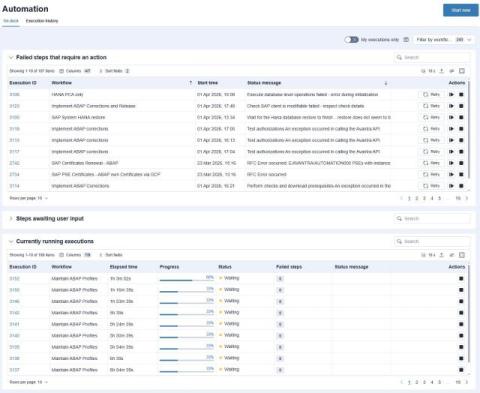
SAP customers with complex SAP know the challenges of managing multiple landscapes well. While classic tools like SAP Landscape Management (LaMa) and Focused Run served us well for years, they were built for a static, on-premises world. Now, with the 2027 end-of-support deadline for legacy solutions looming, the "fog" of hybrid management is getting thicker.
Multi-cloud environments make outage detection harder. Relying on individual status pages from Amazon Web Services, Google Cloud Platform, and Microsoft Azure often leads to delayed, incomplete, or conflicting signals during incidents. This article explains how fragmented visibility impacts incident response, and how aggregating status across cloud and SaaS dependencies helps DevOps teams detect outages faster and respond with confidence.