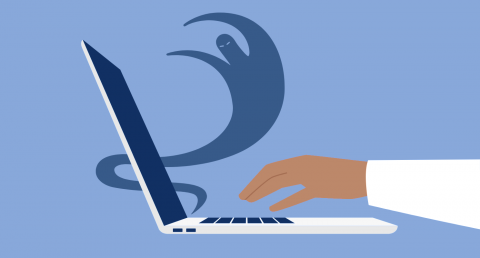
No Longer Haunted by the Ghost of AIOps Past
How AIOps has evolved into an accessible and efficient solution.


The latest News and Information on Incident Management, On-Call, Incident Response and related technologies.
How AIOps has evolved into an accessible and efficient solution.
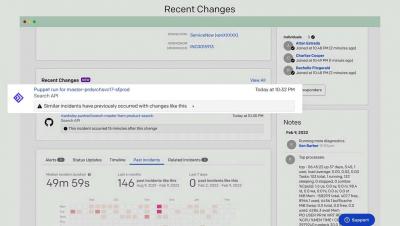
What is one of the first things you should do when you are assigned an incident via PagerDuty? If you immediately thought “Acknowledge!” you are not wrong, but after that, it’s all about resolving the issue as quickly and painlessly as possible. The first step to resolution is to investigate what caused the incident in the first place so you can easily get a fix in place.
Cloud services have skyrocketed in popularity in the past few years, providing a vast array of resources as well as a cost-effective path for the migration from on-premises servers to the cloud. In fact, cloud services are handling all the computing needs of many businesses. It’s very likely you’re already using cloud services and will continue to use more as time goes on.
What do a sinking ship and an improperly equipped data center have in common? For Dell Senior Director of Global Network and Datacenter Services Paul Beninati, the two have a lot in common. At least, from the perspective of company proactivity and ITOps performance goals.
Interrupts are often seen as a problem that eats away at your team’s productivity, and gets in the way of shipping important things for your customers. It’s often consciously accrued from the tech debt we accept to ship features sooner. However when a team doesn’t have a good strategy for dealing with the consequences of those decisions, the pain is felt much more acutely and much sooner.
Every year there is a surprise in a Radar report. While it won’t be a surprise to our thousands of customers who are seeing tremendous benefits with us, PagerDuty is excited to be named a Leader in the 2022 GigaOm Radar for AIOps Solutions. GigaOm uses extensive criteria to evaluate vendors in their Radar.
Multi-cloud is inevitable. With AIOps, struggling in its complexity doesn’t need to be. Business technology stacks don’t appear out of a vacuum. For the modern cloud-enabled, cloud-dependent company (that is to say, most of them), the look from the inside looks more like an ongoing evolution than a monolithic choice.