The latest News and Information on Monitoring for Websites, Applications, APIs, Infrastructure, and other technologies.
On Monday September 28 a multi-hour global Microsoft 365 outage brought down Teams, Office 365 and Outlook leaving many people disconnected. While Microsoft outages are rare, there are a range of possible issues on your network and in your user’s environment that can cause service issues at any time. Knowing quickly when these are happening, and what’s causing them is key to keeping users productive on Microsoft 365.
For today’s tech tip, we’re going to focus on our Endpoint Monitoring Client and two specific use cases: Wi-Fi and application health. With so much of the workforce working remotely, Endpoint Monitoring is an essential tool to help smooth the transition. According to recent research from Gartner, nearly half of US employees will continue to work remotely for at least some of the time post-pandemic.
The whole internet spins across different domains but when we talk about the backbone suite of every organization, MS Office 365, is for sure, one of the biggest contenders. Just like the recent Century Link/Lumen outage, we witnessed another major outage, this time Microsoft O365. This month might as well be considered a bad month for the internet, as we have seen a lot of daily used consumer services getting impacted like Reddit, Pinterest, Google Services, etc.
Intelligent Medical Objects (IMO) and its clinical interface terminology form the foundation healthcare enterprises need, including effective management of Electronic Health Record (EMR) problem lists and accurate documentation. Over 4,500 hospitals and 500,000 physicians use IMO products on a daily basis. With Honeycomb, the engineering team at IMO was able to find hidden architectural issues that were previously obscured in their logs.
Like many in IT, I am a big fan of Microsoft System Center Configuration Manager (SCCM). It’s one of those tools that you can’t really go without: it can help locate your company’s servers, desktops and mobile devices; it helps install client software, patch updates (see Microsoft Patch Tuesday); and it protects your endpoints and access control tools. All good things, but… Sometimes our beloved SCCM needs a little backup—like Robin to Batman.
Earlier this year, we shared the certified Ansible Collection for Sensu Go, which makes it easy to automate your monitoring and achieve real-time visibility into auto-scaling infrastructure. Now that Sensu Go 6 has been released, we’ll share the latest updates on the Collection, including the management aspects of Sensu Go 6, with a focus on the structure of Ansible playbooks in the Sensu Go 6 world.
It seems almost everything is going digital during this pandemic: businesses, education, and medical consultations. This increased digital consumption is squeezing the juice out of the IT infrastructure of many organizations. On top of that, remote work policies are posing serious security issues. At times like these, IT infrastructure monitoring is like a football game for IT admins, except: So how do you navigate all these challenges and score a touchdown?
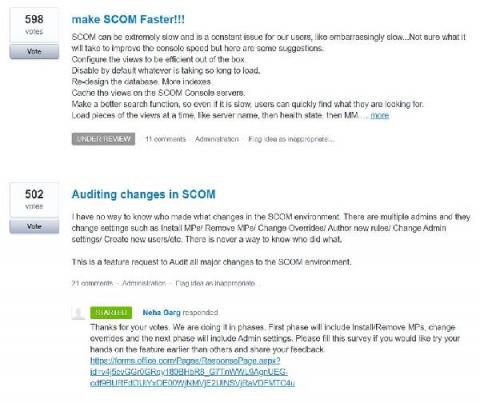
Have you ever looked at SCOM on User Voice - Microsoft’s way of collecting feedback on what end users have to say about SCOM and its future? Well good news, the top 2 items are going to be addressed! At Ignite 2020 - System Center session, Dianna Marks (SCOM Product Marketing Manager) told us Microsoft have heard your feedback and will be taking action.