Operations | Monitoring | ITSM | DevOps | Cloud

How Skylar MCP Gives Agentic Workflows the Operational Context to Act With Confidence

AI models can reason over language, summarize findings, and explain patterns. What they cannot do on their own is see the real-time operational state of your environment. Ask a model about a critical incident and it will answer from whatever context it is given, which means the answer is only as trustworthy as the input. In operations and compliance workflows, an answer is only useful if it is grounded in current service context and governed access to the systems that define reality.

Shadow AI Is Happening Within Your Organization

A majority of office professionals (72%) believe they understand how to use AI for their job better than the team responsible for managing AI at their company. While it’s encouraging to see employees embrace AI with such confidence, organizations will want to ensure they are providing the tools, guidance, and safeguards needed to help employees use AI safely.

AI at the edge: simplifying infrastructure with Cisco and Canonical

Legacy infrastructure was not designed for the requirements of the AI era. While large-scale model training remains centralized in data centers, test-time inference is rapidly shifting to the edge to reduce latency and bandwidth consumption. This shift creates a new frontier for enterprise AI, but deploying at the edge introduces significant manual complexity, interoperability issues, and security vulnerabilities.

How Agentic AI is Transforming Infrastructure and Operations

Infrastructure and Operations (I&O) teams have long operated under a familiar paradox: the faster the business scales, the more pressure I&O absorbs. Every new application deployment, every endpoint added, and every cloud workload spun up generates more complexity, more risk and more tickets. The traditional responses to this pressure — more headcount, more tooling, more scripts, more APIs — have delivered incremental relief at best.

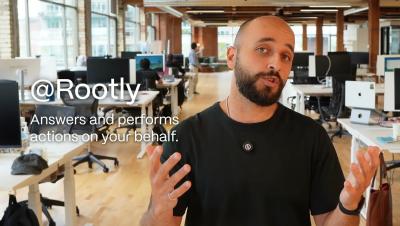
Introducing the Rootly Agent

During an incident, ask the Rootly Agent anything and it'll respond (and act) based on context and your data. Use the Rootly Agent to: The Rootly Agent performs actions on your behalf, so it is bound by the permissions assigned to your user. It will also ask for confirmation before taking significant actions. Rootly admins can turn it on for their workplaces and start running incidents even more efficiently.

Atlassian's HR team leads AI transformation

AI transformation doesn’t succeed without people at the center. At Atlassian, HR is leading the way. Our People team believes that the best AI culture isn’t mandated from the top. It’s built by meeting employees where they are, partnering with leaders across the business, and making AI part of how work gets done from day one. See how Atlassian’s HR team is building a culture of experimentation where everyone builds, and what that looks like in practice.

OpenAI's o1-preview Highlights a New Phase in AI Infrastructure Economics, Says iFrame®

OpenAI's release of the o1-preview reasoning model in September 2024 sparked widespread discussion about advances in artificial intelligence performance. While many observers focused on benchmark results and reasoning capabilities, iFrame founder Vlad Panin examined the launch from a different perspective, emphasizing its implications for the economics and architecture of AI delivery.

Top AI App Makers Transforming Software Development in 2026

Software development has never moved faster than it does today. Just a few years ago, building a functional app required a team of engineers, months of planning, and a significant budget. Now, thanks to the rise of the AI app maker, that process has been compressed into days or even hours. These tools are reshaping how developers, entrepreneurs, and businesses think about creating software, and the shift is happening across industries at a pace that is hard to ignore.

A field guide to the agents in your cluster

You know every service in your cluster by name. You know which team owns each one, what it talks to, how it scales, where its logs go. The agents are a different story. That’s not a criticism, it’s an observation, and it’s one we keep running into. Every company we talk to is shipping agents of some kind, from scales of 10s to 1000s. Customer service bots that field tier-one tickets. Internal copilots that draft emails and summarise meetings and write the boring half of every PR.

Five Principles of an Accountable AI Agent Network: How to Evaluate Any Governance Platform

The first post in this series argued that AI agent governance hasn’t kept pace with deployment. The second laid out the five pillars of accountability, and what is required. The third walked through why network policies, API gateways, MCP/A2A protocols, DIY security patterns, and Role-based Access Control (RBAC) each leave critical accountability gaps. So what does good look like? The five pillars define what AI agent accountability requires.