Operations | Monitoring | ITSM | DevOps | Cloud

The latest News and Information on Cloud monitoring, security and related technologies.

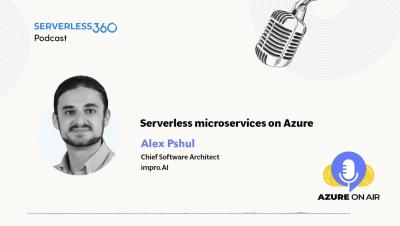
Serverless Microservices on Azure

Serverless Microservices combines both Serverless and Micro-Service Architectures, which gives the advantage of scalable Loosely coupled services without managing physical servers. In this episode of "Azure on Air" podcast, learn how serverless microservices in Azure offer reduced complexity, cost savings, and faster innovation. Discover Azure's core serverless service, Azure Functions, and other managed services that enable full-fledged serverless applications.
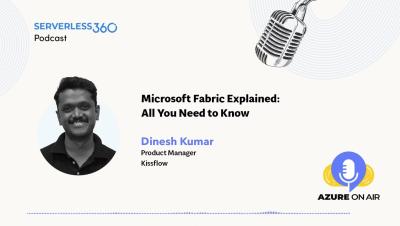
Microsoft Fabric Explained: All you need to know

What is Microsoft Fabric? Microsoft Fabric is an end-to-end analytics solution with full-service capabilities including data movement, data lakes, data engineering, data integration, data science, real-time analytics, and business intelligence—all backed by a shared platform providing robust data security, governance, and compliance.

Navigating Multi-Cloud Environments: Managing Deployments with Ease

Multi-cloud seems like an obvious path for most organizations, but what isn’t obvious is how to implement it, especially with a DevOps centric approach. For Cycle users, multi-cloud is just something they do. It’s a native part of the platform and a standardized experience that has led to 70+% of our users consuming infrastructure from more than 1 provider.

The importance of Azure cost to DevOps

Cloud computing’s ascent has redefined modern business operations. Azure, among other platforms, offers unparalleled scalability, speed, and resilience. However, this vast potential brings about the challenge of cost management. Although DevOps teams traditionally focus more on deployment and uptime, addressing Azure costs is essential. Here’s why.

Security in the cloud: Whose responsibility is it?

While the cloud is recognized as more secure than on-premises servers and infrastructures, it does come with the often talked about shared responsibility model. Cloud providers are responsible for security ‘of’ the cloud, while their clients are responsible for security ‘in’ the cloud. It’s ‘differently secure’, rather than the traditionally secure organizations have been used to when working with on-premises environments.

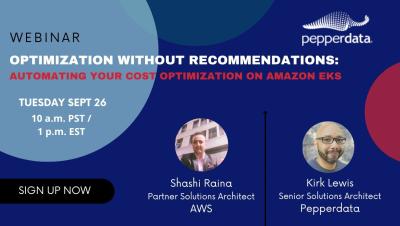
Optimization Without Recommendations: Automating Your Cost Optimization on Amazon EKS

Learn how Pepperdata uses machine learning to provide Continuous Intelligent Tuning automatically to your Amazon EKS applications, helping your platform team recover wasted capacity and ultimately reduce your spend for cloud resources.

31 Crucial DevOps Automation Tools Your Team Needs In 2023

As technology advances and business environments become increasingly competitive, your DevOps team has to continuously improve your product. The challenge is to free up their time so that they can release new product features and improve existing ones. Automating repetitive tasks is one way to accomplish this. Manual approaches also tend to generate or miss errors, slow time to market, and fail to test and monitor system health quickly enough.

Coralogix vs Google Cloud Operations: Support, Pricing and Features

Google Cloud Operations, formerly known as Stackdriver, is relatively new to the observability space. That being said, its position in the GCP ecosystem makes the platform a serious contender. Let’s explore some of the key ways in which Google Cloud Operations differs from Coralogix, a strong full-stack observability platform and leader in providing in-stream log analysis for logs, metrics, tracing and security data.