Operations | Monitoring | ITSM | DevOps | Cloud

The latest News and Information on DevOps, CI/CD, Automation and related technologies.

Adopt open source securely from bare metal to cloud

It’s no secret that developers prefer to use open-source software in their projects. However, the Log4Shell attack or the more recent PyPl crypto miner packages have taught us that there are questions around how it should be managed. At Canonical we have been dealing with open-source security issues since the very first release of Ubuntu and way before the topic became number 1 on every CISO priority list. In this video, our team discusses how your company can manage these challenges and lay the software foundation of a successful cybersecurity program.

The Storage Supply Chain and Its Effect on Infrastructure Teams

For the past couple of years, no one has been able to escape the effects of supply chain problems throughout their personal and professional lives. According to our recent State of Hybrid Cloud Storage survey, storage and the IT equipment that supports storage systems were no exception, and disruptions created extra work and headaches for those teams.

Kubectl wasn't intended for Devs. Why should you force them to use it?

Kubernetes is a quintessential operating system for the cloud, providing a platform for the deployment, scaling, and management of containerized microservice applications. At the heart of Kubernetes is the Kubernetes API, which serves as the primary entry point for interacting with the system. The official client for the Kubernetes API is kubectl, a Kubernetes CLI tool that allows users to manage a Kubernetes cluster and perform a wide range of tasks.

What Is OpenShift?

OpenShift is a platform that allows developers and operations engineers, or even DevOps professionals, to run containerized applications and workloads. Under the hood, it’s powered by Kubernetes, but there’s an additional architectural layer that makes life simpler for DevOps teams. OpenShift is from enterprise software specialist Red Hat and provides a range of automation options and lifecycle management, regardless of where you choose to run your applications.

Simplify management across cloud platforms with OpenCP

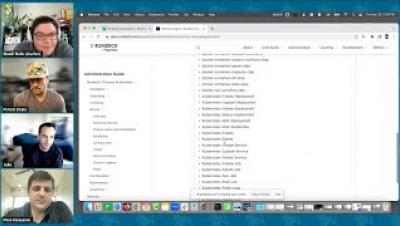
Managing your clusters has become a complex and confusing task. With scattered tools and the requirement to learn specific tools from cloud providers, many companies have trouble making the most of the cloud. That's where OpenCP comes in. Join us as we explore the benefits of simplifying management across cloud platforms with OpenCP. We’ll dive into the benefits of using OpenCP, how it works, and how it is built on the best practices of kubectl and kubeapi.

How Article Turns a Spotlight on At-Risk Work to See Gains Beyond Metrics

Torsten Sinnemann from Article shares how he and his teams use Sleuth's new Work in Progress feature to improve beyond just metrics and boost efficiency, morale and value.‍ Sleuth gives software development and engineering teams the most complete and accurate visibility into DORA metrics across your organization and projects. Work-in-progress metrics can also be helpful for communicating execution status to stakeholders, and for tracking if improvement initiatives being implemented are making a difference.

Tips to lead software teams and manage up in a challenging market

We’ve all seen the news about tech layoffs. If you’re an engineering manager, are you having to squeeze more out of existing teams, because adding staff anytime soon is unlikely? Maybe you’re tempted to micromanage your developers, thinking that if you know every aspect of their work, it’ll boost productivity. But, that approach doesn’t feel right, and you know your devs would hate you for it. What’s an engineering manager to do?