Operations | Monitoring | ITSM | DevOps | Cloud


The latest News and Information on DevOps, CI/CD, Automation and related technologies.


How to monitor DNS query response time
DNS (Domain Name System) servers translate standard language web addresses to their actual IP addresses for network access. DNS response time is the time it takes a Domain Name Server to receive the request for a domain name’s IP address, process it, and return the IP address to the browser or application requesting it. When it comes to DNS response times, the lower the better, and generally values less than 100ms are considered to be in the acceptable range (depending on the application).

How AIOps enhances operational efficiency
Digital data is everywhere, and its sheer volume and ambiguity often make it challenging for us humans to analyze. That’s why we use a special branch of AI called artificial intelligence for IT operations (AIOps) to reveal the deeper structure of copious data. AIOps sits at the intersection of big data and machine learning to improve the efficiency of IT operations.

Monthly Moo | October 2022
Summer has passed and it’s time for fall - cue transitioning leaves, cozy blankets, and all the pumpkin-themed things your heart could ever desire. As we move into the new season, we are excited to announce our fall product releases across Moogsoft Cloud that enable engineers to detect incidents earlier, resolve them faster, and work as a team across the entire lifecycle. Moogsoft’s Fall product updates enable you to: … and so much more! Read on for deeper details.

Review changes before deploying to production - Build. Preview. Deploy.
Whether you have two or two dozen developers working on features for your product, updates can introduce bugs or unwanted changes. Therefore, before merging a feature branch to production, you can review all the changes with our preview deployment feature. It allows you and your team to quickly and easily check that the latest changes work as desired. It also allows you to share feedback and helps prevent “it worked on my machine” scenarios.

Get your time back by getting rid of unused modules with Dropsonde
You’ve probably been using Puppet Forge modules to manage bits in your infrastructure for years. If you’re like most of us, you’ve gradually added more modules and maybe you’ve lost track of exactly what some of them do and on what nodes they’re declared. You may even suspect that you have modules installed that you haven’t actually used in years…. only you’re not quite certain which modules those might be. I am certainly guilty of this!
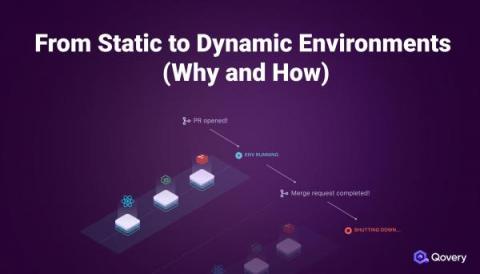
From Static to Dynamic Environments (Why and How)

What is confidential computing? A high-level explanation for CISOs
Privacy enhancing technologies and confidential computing are two of my favorite topics to talk about! So much so that I am writing this blog post on a sunny Saturday afternoon. But wait, what’s that I hear you murmuring? “What is confidential computing? And how does it affect me?” Those are two very good questions.
Containers vs virtual machines: what is the difference?
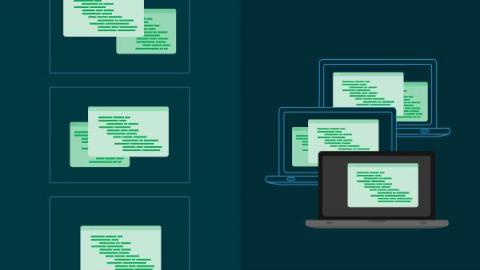
In computing, virtualization is the creation of a virtual — as opposed to a physical — version of computer hardware platforms, storage devices, and network resources. Virtualization creates virtual resources from physical resources, like hard drives, central processing units (CPUs), and graphic processing units (GPUs). By virtualizing resources, you can combine a network of resources into what appears to users as one object.