Operations | Monitoring | ITSM | DevOps | Cloud

The latest News and Information on DevOps, CI/CD, Automation and related technologies.

Simplify NFV adoption - Charmed OSM and Managed Apps

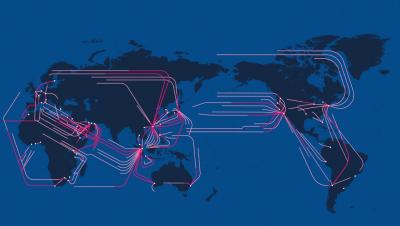
Charmed OSM and Managed Apps let telecom operators accelerate adoption of NFV. This is needed because the way we consume data has changed. We want data at a cheaper price with faster speeds and in larger quantities. To meet the challenge, telecom operators are changing the underlying network infrastructure that delivers data. Software-defined networking (SDN) and network function virtualisation (NFV) are enabling this by lowering costs and improving infrastructure flexibility.

The Anatomy of a Secure Serverless Platform, Pt. 2 -- Development

Stackery’s secure serverless platform for AWS offers teams a key resource to help realize the promise of serverless – by automating otherwise complex infrastructure processes, we enable you to leverage the massive suite of AWS tools and services with minimal management overhead. It’s crucial for teams to do this while enforcing security and ensuring adherence to compliance guidelines.

IAM Access in Kubernetes: How to Install Kube2iam

IAM is the de-facto method of authorization in AWS. Most Kubernetes “Quick Start” guides for AWS do not adequately cover how to manage IAM access in your pods. This blog series will first go over the security issues specific to AWS IAM on Kubernetes, then compare solutions, and then we will end with a detailed walkthrough for setting up your cluster with one of those solutions.

The Wellcome Sanger Institute turns to Canonical for high level Ceph support

The Wellcome Sanger Institute, a global centre of excellence for genomic research, leads the scientific advancement of areas such as cancer, infectious diseases and cellular genetics. With a need to collaborate and share data with other centres around the world, The Institute has to store, process and share vast amounts of data.

Apache Kafka Example: How Rollbar Removed Technical Debt - Part 2

April 7th, 2020 • By Jon de Andrés Frías In the first part of our series of blog posts on how we remove technical debt using Apache Kafka at Rollbar, we covered some important topics such as: In the second part of the series, we’ll give an overview of how our Kafka consumer works, how we monitor it, and which deployment and release process we followed so we could replace an old system without any downtime.

Kubernetes Master Class: Understanding and Implementing Service Mesh

Service mesh has developed a huge amount of excitement in the Kubernetes ecosystem. Istio is a service mesh tool built right into Rancher. Service mesh promises to add fault tolerance, canary rollouts, A/B testing, monitoring and metrics, tracing and observability, and authentication and authorization, eliminating the need for developers to instrument or write specific code to enable these capabilities. The goal is to let developers focus on their business logic and leave the rest to Kubernetes and Istio. But many users find it challenging to install, configure, monitor and manage their service mesh solution.

Discover How Serverless360 Can Help Improve Remote Work

Azure Serverless Applications are indeed powerful and super-efficient in delivering the right solution sooner to the market. However, the Azure portal is just not enough to meet the operational and support requirements of the Serverless Application. Organizations cannot afford to invest time and effort in skilled Azure resources in proving support.

Episode 11: Connecting to Redis with .Net Core and C#

We've finally finished screwing around with basic groundwork. Today we start writing actually useful application code! First, can we connect to Redis? Connecting to Redis implies some connection strings, so we'll create a basic environment based configuration while we're thinking about it.

How to Deploy OKD Minishift onto a Publicly-Hosted VM

If you are familiar with minikube, a lightweight implementation of the Kubernetes ecosystem, then you may have also heard of Minishift. Designed as a development platform and delivered through a utility, this is the Red Hat OKD (Origin Kubernetes Distribution—formerly called OpenShift Origin) all-in-one implementation of Red Hat OpenShift. Being highly versatile, it can be deployed on varying platforms.