The latest News and Information on DevOps, CI/CD, Automation and related technologies.
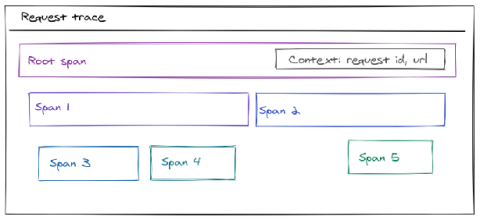
Large-scale cloud applications are usually built using interconnected services that can be rather hard to troubleshoot. When a service is scaled, simple logging doesn’t cut it anymore and a more in-depth view into system’s flow is required. That’s where distributed tracing comes into play; it allows developers and SREs to get a detailed view of a request as it travels through the system of services.
It’s no secret that AWS Lambda adoption has grown steadily since AWS first released it in 2015—and for good reason. The benefits of adopting Lambda are many: leveraging Lambda eliminates the need to provision and manage servers, enabling teams to just focus on their code without the mental and operational overhead of worrying about the underlying infrastructure.
Want to contribute to the community by sharing your own tutorials? Just head over to https://ubuntu.com/tutorials
Deploying and monitoring performance for an entire Kubernetes cluster can be complex. To simplify the process, we’ve added service discovery functionality to eliminate complex configuration, in addition to more advanced monitoring for viewing activity inside containers. Service discovery identifies k8s pods running on a cluster and immediately starts monitoring system performance. All containers are identified, regardless of complexity.
Amazon Elastic Block Store (EBS) provides block storage for applications that are running in the cloud. However, not every company is getting the most out of the EBS volumes they are using. Some companies can pay too much for EBS volumes without utilizing the allocated storage and IOPS. Other organizations may pay high prices because they are using the wrong disk type for their needs. This article explains five techniques you can use to optimize the performance of your EBS workloads.
Kubeflow Pipelines are a great way to build portable, scalable machine learning workflows. It is one part of a larger Kubeflow ecosystem that aims to reduce the complexity and time involved with training and deploying machine learning models at scale. In this blog series, we demystify Kubeflow pipelines and showcase this method to produce reusable and reproducible data science.