Operations | Monitoring | ITSM | DevOps | Cloud

The latest News and Information on DevOps, CI/CD, Automation and related technologies.

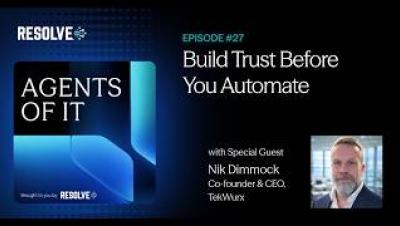
AI in IT Operations: How to Build Trust, Automate Smarter & Prepare for Autonomous IT

What does it take to make AI and automation actually work in enterprise IT? In this episode of Agents of IT, Resolve’s Zach Austin sits down with Nick Dimmock, Co-Founder and CEO of TechWorks, to discuss how IT automation is evolving, why trusted data matters, and what organizations need to build before AI can deliver meaningful business outcomes.

How to Use Megaport Storage as a Veeam Backup Target

Learn how to use Megaport Storage as an S3-compatible Veeam backup target for scalable, private, offsite backup storage. Table of Contents A backup is only useful if it can be retrieved when needed. Where backups are stored determines how well they’re protected from incidents at the primary site, how long recovery transfers take, and what it costs to bring the data back.

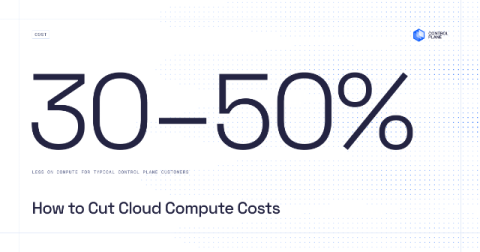
How to Cut Cloud Compute Costs Without Rewriting Your Apps

The fastest way to cut cloud compute costs is to stop paying for capacity your workloads do not use. Right-size CPU and memory to real usage, scale idle workloads to zero, and make cost policy a platform default instead of a quarterly review. Control Plane does all three at the platform level: Capacity AI right-sizes running workloads, autoscaling scales idle ones to zero, and customers typically spend 30 to 50 percent less on compute than running directly on AWS, GCP, or Azure.

AI cost allocation: how to attribute AI spend by team, product, and customer

AI cost allocation is the practice of attributing every dollar of AI spend to the team, product, feature, or customer that generated it. That spend includes API tokens, GPU compute, per-seat tools, and shared infrastructure. It's harder than cloud allocation because AI spend arrives untagged, spans vendors, and pools in shared resources. Four methods cover most cases: tag-based, key-based attribution, proportional split, and usage-telemetry.

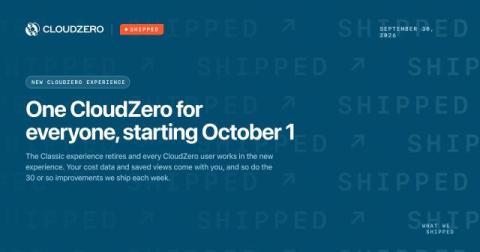
Shipped: One CloudZero for everyone, starting October 1

On June 3, we made the new CloudZero experience the default for every customer. Since then, we’ve shipped around 30 improvements a week: side-by-side period comparisons in Explorer, budgets you can create and edit right in the app, threshold alerts on dashboard tiles, and Monitors, which flags AI and cloud spend that moves outside its normal pattern and shows you what changed. Pages load 28 to 61% faster. JavaScript execution is 85% faster.

Auto-Generate Richer Azure Architecture Diagrams

Azure architecture diagrams go out of date fast, and management-plane data alone misses the runtime connections that matter most. In v5.4, diagrams move to their own Diagrams tab in Azure Documenter. Alongside the enhanced network and workload diagrams, there is a new Resource Visualizer diagram. Scope it by subscription and resource group, or write your own custom Azure Resource Graph query to define exactly which resources to include.

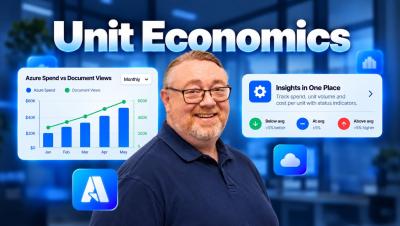
Change the Cloud Cost Conversation from Spend to Margin

"Our Azure bill went up 20% last month." Without context, finance only sees a rising cost. Unit economics gives them the full picture. Turbo360 lets you overlay business KPIs on your Azure spend. Track units like orders, active users, document views, or monthly recurring revenue alongside cost, and see your cost per unit month over month. Now the conversation becomes: "Orders went up 150% and our cost per order came down." That is a story about efficiency, not overspend.

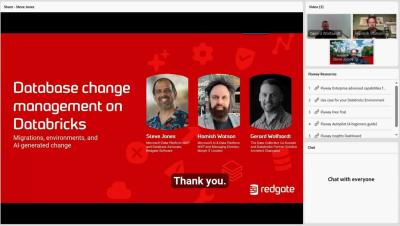
Database change management on Databricks: migrations, environments, and AI-generated change

You wouldn’t ship untested SQL Server database changes – Why is Databricks different? Databricks is where the data estate is growing, and increasingly where AI workloads run and generate change. But schema change there still happens the hard way: views and stored procedures managed through manually versioned scripts, drift between workspaces discovered when a deployment fails, and no reliable record of what changed, when, where, or why. As AI raises the volume and speed of schema change, these gaps widen.

This AI agent finds your app's bottlenecks and suggests the fix

Most teams collect the profiles and traffic data that explain a slowdown. Almost nobody has time to read it before users notice. In this Product Highlights conversation, Sylvain Guittard, Senior Director of Product at Upsun who leads the team behind the Upsun console and CLI, breaks down the Upsun Cloud Performance Agent, the first background agent running on Upsun Cloud. His take: "We monitor everything, we feed that into an agent, and the agent will be capable of finding what the bottlenecks are in your application. And on top of it, it gives you a patch, or a way to fix it." We get into.