Operations | Monitoring | ITSM | DevOps | Cloud

The latest News and Information on Monitoring for Websites, Applications, APIs, Infrastructure, and other technologies.

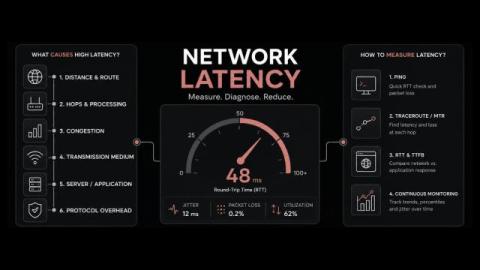
Top 9 Network Performance Metrics You Should Measure in 2026

How do you know if your network is actually healthy right now? For most IT teams, answering that question means jumping between multiple tools, dashboards, and alerts, only to end up with more uncertainty than clarity. The problem is not missing data. It is knowing which signals matter, what normal really looks like, and when performance issues start affecting users and business operations. Modern networks generate thousands of metrics every minute, but not every spike or alert deserves attention.

Best Cloud Monitoring Tools in 2026 [20+ Analyzed, Top 6 Picks]

The best cloud monitoring tools are Hyperping (uptime, server monitoring, status pages, and on-call at a flat rate), Datadog (full-stack observability with the broadest integration catalog), New Relic (usage-based observability with the most generous free tier), Dynatrace (AI-driven automatic root-cause analysis for large enterprises), Better Stack (monitoring paired with logs and incident response), and Prometheus + Grafana (the open-source standard for cloud-native metrics).

How to Install and Configure an OpenTelemetry Collector

Originally published June 2024. Updated May 2026. A lot has changed since the first version of this guide. In May 2026, OpenTelemetry officially graduated within the CNCF, the highest maturity level a project can achieve. All three core signals (metrics, logs, and traces) are now stable across every major language SDK. Collector adoption has never been higher, and the ecosystem around it, particularly OpAMP for remote management, has matured significantly. This update walks through three things.

Microsoft 365 backup best practices: A practical guide for IT teams

Microsoft 365 plays a critical role in modern business communication and collaboration with services such as Exchange Online, SharePoint Online, and OneDrive for Business. However, many organizations overestimate Microsoft 365’s native protection and recoverability. In reality, Microsoft 365 operates under a shared responsibility model. While Microsoft ensures infrastructure availability and uptime, organizations are responsible for protecting and recovering their data.

FinOps KPIs for IT Infrastructure: A Practical Field Guide for Cost Visibility

Infrastructure cost visibility has become a critical part of IT decision-making. Performance still matters, but for many infrastructure leaders, that’s no longer the full conversation. Leadership teams increasingly want clarity around cost movement, upgrade exposure, underutilized resources, and whether infrastructure decisions are financially defensible. That creates a different requirement for operations teams: visibility that connects technical behavior to business impact.

Everything We Talked About at O11yCon 2026

We just wrapped O11yCon 2026, and this year's conversations hit differently. Agent-based software development is here, now. It's no longer an optional choice, and everybody is struggling to understand what their agents are doing and how to make them cost less and perform better. Over the course of fifteen talks, we saw clearly that the old assumptions on how and who (or what) writes our software has been upended. Here are some highlights. We'll have videos available in the near future.

You don't need to pick one: how Sentry and OpenTelemetry work together

You already instrumented the backend with OpenTelemetry. Your services emit spans. Your teams know the OTel APIs. Maybe you already run a Collector. So when you start evaluating Sentry, the obvious question is: Do you need to replace your OpenTelemetry setup with the Sentry SDK? No. The practical answer is usually: keep OpenTelemetry where it already works, add the Sentry SDK where it gives you more application context, and send OpenTelemetry Protocol (OTLP) events to Sentry.

Builder in the loop: Eric Lake on making AURA smarter after every incident

Builder in the Loop is a Mezmo interview series focused on the engineers, product leaders, and operators shaping AURA, an open-source, MCP-native agent harness for production operations. The goal is to get past the polished product layer and talk through the decisions that matter when AI starts interacting with real systems. Key questions include: What should agents be allowed to do? How do they get better over time? Where should humans stay in the loop?