Operations | Monitoring | ITSM | DevOps | Cloud

How to Monitor MySQL Using OpenTelemetry

MySQL is the trusted open-source database management system for many desktop, mobile, web, and cloud applications. Monitoring the performance of MySQL is critical but as the applications expand over multi-cloud, cloud-native, and hybrid cloud, monitoring also grows in complexity. Continuous monitoring and scaling help applications take advantage of MySQL’s capabilities such as reliability, security, flexibility, availability, and performance scalability.


How Our FinOps Account Management Team Helps You Achieve Your Cloud Savings Goals

At CloudZero, we’re in the business of driving positive business change. Whenever we work with a client, our goal is to share insights rooted in our FinOps perspective and platform expertise that helps customers save on cloud costs and build strategies for engineering-led optimizations. Each experience is curated for the clients FinOps maturity stage and unique business goals; that’s what personalized service is all about.

Bare metal vs virtual machines vs containers: Which is the right infrastructure for me?

There are three main infrastructure types to consider when hosting and deploying applications: Bare Metal, Virtual Machines (VMs), and Containers, each with its own advantages and disadvantages depending on your use case. The three technologies are not mutually exclusive however, as both VMs and containers run on top of bare metal servers, while containers can also be deployed inside VMs.

Understanding Request Latency with Profiling

It can be hard to figure out why response times are high in Java applications. In my experience, when engineers investigate this type of issue, they typically use one of two methods: They either apply a process of elimination to find a recent commit that might have caused the problem, or they use profiles of the system to look for the cause of value changes in relevant metrics.

How does SIGNL4 provide for truly reliable alerting?

Of course, one expects an alerting solution to be reliable. This is important because a missed alert can have a significant impact on the business. It is about IT uptime, disruptions in production or other critical system conditions. Business processes, production workflows and therefore money, the reputation of the company or even the health of the employees are at stake. But what does reliable alerting actually mean and how is it achieved?

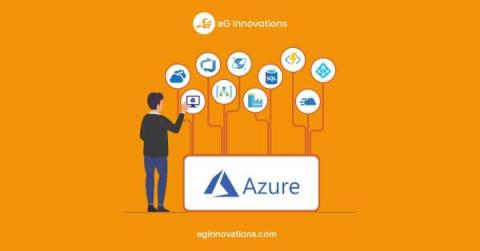
Choosing Azure Database Services - What are the options?

Microsoft Azure offers a choice of relational and non-relational database services to support a wide range of application needs and demands. Built-in intelligence helps automate management tasks like high availability, scaling, and query performance tuning to provide users with services that ensure applications are always available and performant. Many services offer essentially limitless database scale and SLAs (Service Level Agreements) usually range between 99.9-99.999% availability.