Operations | Monitoring | ITSM | DevOps | Cloud

How Flowmon Helps to Detect SUNBURST Trojan Attack in Your Network

Flowmon Anomaly Detection System from Kemp now contains Indicators of Compromise (IoC) for the SUNBURST trojan specifically. Users of the Flowmon network detection and response (NDR) tool can check if they are under attack and set up measures to detect SUNBURST. This December, the world shook at the news of several US government bodies falling victim to a highly sophisticated attack.

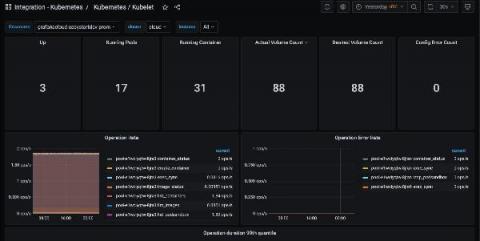
Mitigating Kubernetes Security Vulnerability when using ExternalIP Services (CVE-2020-8554)

Earlier this month the Kubernetes project discovered a security issue affecting multitenant clusters: If a potential attacker can already create or edit services and pods, then they may be able to intercept traffic from other pods (or nodes) in the cluster. An attacker that is able to create a ClusterIP service and set the spec.externalIPs field can intercept traffic to that IP.

Introducing a new dashboard creation experience in Cloud Monitoring

Having good observability is vital to the health of your cloud infrastructure and applications, and a key element to using that information effectively is being able to create dashboards with relevant metrics. Today we are announcing a new dashboard creation experience from Cloud Monitoring that allows you to generate a greater variety of visualization types, introduces better flexibility for dashboard layouts, and makes data manipulation easier so you can create dashboards that better fit your needs.

Performance tuning with SQL Monitor: tempdb usage, parameter sniffing, and blocking chains

Looking to level up your performance tuning game? Check out three new videos on tempdb, unstable query plans, and identifying blocking chains with SQL Monitor. I got to work with some of my favorite folks from the SQL Monitor team last week to build some new workload patterns for our online monitoring demo site. Here are three videos sharing some highlights of performance tuning features in SQL Monitor.

Redgate embraces open source with its ongoing development of Flyway

18 months ago, Redgate embarked on a new and ambitious journey with the acquisition of Flyway. It’s been quite a ride since then and we thought we’d end 2020 with an update on what’s been happening with the world’s most popular open source migrations framework for database deployments. We’ve learned a lot, and I wanted to share that with you in this post.

Top 10 ways to make your Mattermost end users happier

If you’re running Mattermost self-managed editions, there are configuration options and features available to improve the Mattermost user experience. Here are our top ten recommendations to make your Mattermost end users happier and more productive. Your users will thank you! Mattermost gets massively better with every release, and upgrading only takes a few minutes.

SolarWinds Update on Security Vulnerability

On Saturday, December 12, our CEO was advised by an executive at FireEye of a security vulnerability in our Orion Software Platform which was the result of a very sophisticated cyberattack on SolarWinds. We soon discovered that we had been the victim of a malicious cyberattack that impacted our Orion Platform products as well as our internal systems.

Achieving Continuous Deployment with Artifactory Webhooks & Docker

Continuous Deployment (CD) requires setting up your infrastructure and automation to update your solution with the latest code change from the main branch. That’s what we call “Liquid Software”. Full automation makes your deployment seamless, less error prone, faster and it makes the feedback loop shorter because you can now deploy after each change. Achieving continuous deployment requires the following elements.

Elastic Cloud Terraform provider now available in beta

We’re excited to share that the official Elastic Cloud Terraform provider is now available in beta. Operations and SRE teams often rely on Terraform to safely manage production-related infrastructure using methodologies such as infrastructure as code, which allows you to apply peer-reviewed infrastructure changes in an automated and controlled fashion. The provider works with Elasticsearch Service on Elastic Cloud, Elastic Cloud Enterprise, and Elasticsearch Service Private environments.