Operations | Monitoring | ITSM | DevOps | Cloud

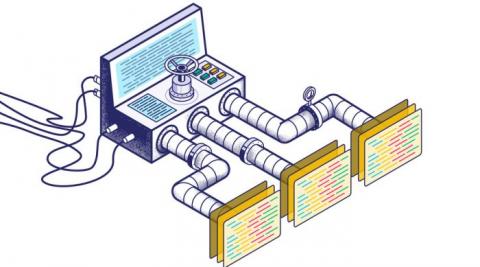
Infrastructure Monitoring With Amazon CloudWatch and OnPage Integration

Digitalization of business has transformed the world and its industries. Software that upkeep digital initiatives are no longer categorized as a support function. Rather, they are integral to every business process. Modern organizations require infrastructure monitoring tools to detect anomalies and alerting systems to automate remediation processes.

Hiring and Managing IT During a Crisis

Martha Heller is CEO of Heller Search Associates, an IT leadership executive recruiting firm. Martha is a frequent keynote speaker at IT industry events and author of two books: The CIO Paradox: Battling the Contradictions of IT Leadership, and Be the Business: CIOs in the New Era of IT. She spoke about IT career trends on a recent webinar.

Is your infrastructure a transformation enabler or a roadblock?

According to research from McKinsey, only 16% of digital transformation efforts have successfully improved performance and equipped the organizations to sustain changes in the long term. That’s a shockingly low number. Why is this happening? And how can you prevent this from derailing your own digital transformation journey and putting your business models, revenue, and profitability at risk?

Kubeflow operators: lifecycle management for the ML stack

Canonical, the publisher of Ubuntu, releases Charmed Kubeflow, a set of charm operators to deliver the 20+ applications that make up the latest version of Kubeflow, for easy consumption anywhere, from workstations to on-prem, public cloud, and edge. > Visit Charmed-kubeflow.io to learn more. Kubeflow provides the cloud-native interface between Kubernetes, the industry standard for software delivery and operations at scale, and data science tools: libraries, frameworks, pipelines, and notebooks.

Scaling Kubernetes Deployments with InfluxDB & Flux

This article was written by InfluxDB Community member and InfluxAce David McKay. Eighteen hours ago, I was meeting with some colleagues to discuss our Kubernetes initiatives and grand plan for improving the integrations and support for InfluxDB running on Kubernetes. During this meeting, I laid out what I felt was missing for InfluxDB to really shine on Kubernetes.

Phishing Emails - Less Ocean, More Aquarium

Here at Splunk, when we discuss Splunk Phantom with customers we end up talking about phishing pretty frequently because it’s something like Olivia outlined in a recent blog post, "Between Two Alerts: Phishing Emails — Don’t Get Reeled In!", customers both encounter and talk to us about all the time. It makes a lot of sense — phishing is a super common issue that almost everyone deals with ad nauseum and it’s annoying to investigate.

Display a Persistent Banner Message with the New Global Banner

For years, Splunk has provided the ability to display dismissible Bulletin Messages. But what if you need to show a non-dismissible, highly-visible message across all your product pages? Now you can, with the new Global Banner! One of our top-voted Customer Ideas, the Global Banner allows an admin to display a one-line message, with optional hyperlink, at the top of their product pages.

Splunk On-Call: New Name, New Features to Improve On-Call For Your Teams

Today, more than ever, mobilizing remote teams to triage and resolve outages separates is separating enterprises able to accelerate their digital initiatives from those who don’t. Observability has elevated our ability to quickly detect problems and ask questions in our system to triage and reduce “time to clue” — an increasingly important metric.

Monitor serverless configuration changes with Datadog Deployment Tracking

Serverless architectures remove the need to provision and maintain infrastructure components like servers and containers, so developers can focus on writing and deploying code. However, serverless architectures also introduce new challenges to monitoring and observability. Teams building serverless applications can iterate quickly and deploy frequent code and configuration changes, making it difficult to track what impact these changes have on your applications.