Operations | Monitoring | ITSM | DevOps | Cloud

Interview with Honeycomb Engineer Chris Toshok: Dogfooding OpenTelemetry

At Honeycomb, we talk a lot about eating our own dogfood. Since we use Honeycomb to observe Honeycomb, we have many opportunities to try out UX changes ourselves before rolling them out to all of our users. UX doesn’t stop at the UI though! Developer experience matters too, especially when getting started with observability. We often get questions about the difference between using our Beeline SDKs compared with other integrations, especially OpenTelemetry (abbreviated “OTel”).

Bring new insights to your IP analytics with a global administrative layer in Elastic Maps

We love maps at Elastic. In the Elastic Stack, there is one core component of all data we visualize using maps: Location. Location can mean reporting real-time positions of fleet vehicles, using a geofence for limiting search results, gauging application performance metrics from a geographic area, or identifying security threats by attaching geographic coordinates to IP addresses.

Debugging broken grok expressions in Elasticsearch ingest processors

In two previous posts, we covered structuring data with grok and building custom grok patterns. But what happens if you just can’t get your grok patterns to work? In this article, we’re going to use Kibana’s Grok Debugger to help us debug a broken grok pattern. The divide-and-conquer method described below should help you to quickly find the reason that a given grok pattern is not matching your data.

Fiserv Eliminates Ticket Overload with AIOps

Fiserv, the Fortune 500 payments and financial technology provider, needed to streamline and automate its IT incident management process to detect and fix issues earlier and more quickly. The incident management workflow was complex, primarily because mergers and acquisitions over the years had made Fiserv’s IT environment very heterogeneous. “The challenges we were facing were enormous,” IT Director Chris Kreps says.

Partner Chat: Flycast on ESM and IT Operations Management

Bobby McCullough is a Sales Engineer with Flycast, an IT service provider specializing in service management, asset management, security and IT operations management. Flycast uses OpsRamp internally and also resells the platform to its customers. He spoke with us about trends in ESM, ITSM and IT operations.

How FireHydrant's CI/CD infrastructure fixes bugs faster

Almost everyone knows that working with third-party APIs can be challenging. Sometimes the errors happen unexpectedly. Sometimes the error information that you receive is inaccurate. While most people feel these pains acutely, I’d like to share how we answer these challenges at FireHydrant and how it’s helped us avoid headaches and stress.

DevOpsDays Chicago 2020 Wrapup

DevOpsDays Chicago 2020 was held on September 1, online. It was the first time the conference was held virtually due to the coronavirus pandemic. I was excited to attend for a couple of reasons. First, DevOpsDays Chicago is one of the better known and respected DevOpsDays held in the US. I’d never been able to attend it before, so it was great to get the opportunity. Also, I’d been missing the DevOpsDays community.

Kubernetes vs. Docker: What Does It Really Mean?

“Kubernetes vs. Docker” is a phrase that you hear more and more these days as Kubernetes becomes ever more popular as a container orchestration solution. However, “Kubernetes vs. Docker” is also a somewhat misleading phrase. When you break it down, these words don’t mean what many people intend them to mean, because Docker and Kubernetes aren’t direct competitors.

Tutorial: Getting Started with ROS

ROS, the Robot Operating System, is the platform of choice for robot development. However, the breadth and depth of existing documentation can be daunting for the ROS beginner. Where should you start learning about ROS 2 on Ubuntu? All robots based on ROS and ROS 2 are programmed using five simple but core constructs: In this tutorial and associated video we’ll introduce these concepts with simulated robots.

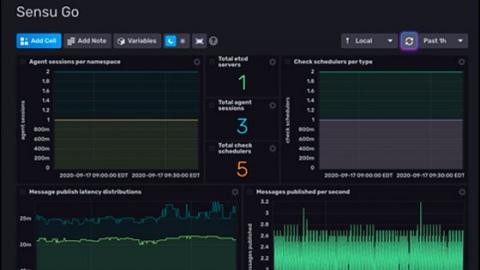
Integrating Sensu Go into your CI/CD pipeline with sensuctl prune

Since the release of Sensu Go, many in our community have told us Sensu is easier and faster to deploy, more portable, and more compatible with containerized and ephemeral environments (as compared to Sensu Core, the original version of Sensu). In a recent webinar, I talked about integrating Sensu Go with your CI/CD pipeline and how to use the sensuctl prune command to keep your Sensu resources in a declarative state, reducing dependence on traditional configuration management tools.