This is the final article of a three-part series. To start at the beginning, read Part 1: Benefiting from multi-cluster setups requires familiarity with common variations and Part 2: Exploring the facets of a multi-cluster observability strategy. As companies scale software production, they lean on Kubernetes as a crucial container orchestration platform for managing, deploying and ensuring software availability.
Cribl Stream is a real-time security and observability data processing pipeline that can be used to collect, transform, enrich, reduce, redact, and route data from a variety of sources to a variety of destinations. One of the popular destinations for Cribl users is Elastic SIEM. This blog post will walk you through the steps on how to set up Cribl Stream to normalize and forward data to use with Elastic Security for SIEM.
Today, we are pleased to announce the release of CFEngine 3.23.0! This is a non-LTS (non-supported) release, where we introduce new features for users to test and give feedback on, allowing us to polish before the next LTS.(CFEngine 3.24 LTS is scheduled to release summer 2024). The codename for this release is anniversary, as this year is CFEngine’s 30th anniversary.
The Experience Everywhere tour is a wrap, and what a tour it was! We had an incredible time meeting up with our customers, partners, and DEX practitioners from all around the world to share expertise, learn, and grow. If you couldn’t make it (or even if you could) – you can relive all the action now over on our Experience Replays. Below, we asked a few Nexthinkers to send us their thoughts on each of the four Experience locations.
We're excited to share that Checkly has been named a 2023 Winter Intellyx Digital Innovator. This recognition resonates deeply with our Monitoring as Code (MaC) workflow and the values we uphold in delivering Checkly to cloud-native engineers, solving uptime and reliability challenges to ship with confidence.
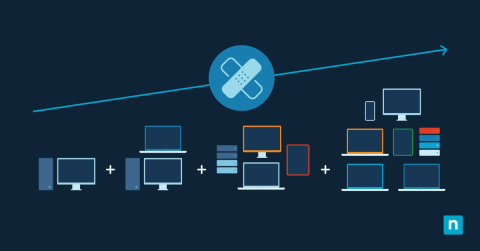
Our reliance on technology has made system security essential. Today’s cyber threats are more advanced than ever, surpassing traditional defenses like firewalls and antivirus software. In 2023, over 90% of successful cyberattacks involved the exploitation of unpatched software vulnerabilities.