Operations | Monitoring | ITSM | DevOps | Cloud

What is Event-Driven Automation? Event-Driven Automation Programming Examples

Event-driven automation can turn repetitive, manual, daily tasks into something that you set and forget. It’s a great way to trigger automatic events and prevent human error. In this blog, we'll explore a few event-driven automation programming examples, from sending an email to a certain group of users when a file has been uploaded to a server to generating reports.
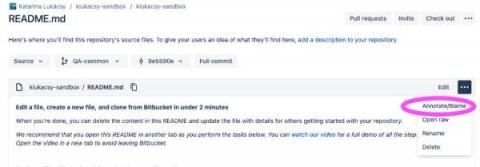

Improving discoverability of the git blame functionality on Bitbucket Cloud UI

We are making git blame feature more discoverable on the Bitbucket Cloud UI. A very useful feature of git, git blame has been available on the Bitbucket Cloud UI for years. Similar to how git blame works with git, on Bitbucket Cloud it annotates each line in the given file with information from the commit which introduced the line.

Replay Data From Object Storage for Long-term Incident Investigations

Psst, hey pal, would you like to buy a time machine? I am not talking about some H.G. Wells monstrosity where you somehow end up being chased by dinosaurs or become your own grandparent. But a time machine for your observability data. License costs and tool performance often keep organizations from ingesting all their data or require them to limit data retention time. Security incidents are often discovered long after these retention times are exhausted or require data that was never ingested.

The Ins and Outs of SaaS Network Monitoring: A Comprehensive Guide for Optimal Performance

Businesses rely heavily on their networks to maintain smooth operations, enable seamless communication, and facilitate efficient data transfers. However, network instability can throw a wrench into even the most well-oiled business machinery, resulting in frustrating delays, dropped connections, and reduced productivity. This is where network jitter monitoring comes to the rescue.

3 Key Insights from the Gartner Market Guide for SaaS Management Platforms

As the world continues to shift toward a remote-first or hybrid work model that relies heavily on cloud applications and SaaS, new business challenges have emerged for the IT industry. One of these challenges we’ve been tracking here at Auvik is the lack of management for SaaS applications and the risks this kind of shadow IT can bring to a business. That’s why we think the 2022 Gartner Market Guide for SaaS Management Platforms (December 2022) is so critical.

Streamline incident management with OpManager and PagerDuty

During IT incident management, if there is one process where effective communication makes all the difference, it’s incident triage. In sending alert notifications, configuring escalation policies and hand-off notifications, and keeping stakeholders informed, effective communication plays an integral role in orchestrating incident triage. This means you need to proactively alert technicians and stakeholders with context-rich communication.

Six Most Useful Types of Event Data for PLG

The success of businesses like Zoom, DropBox, and Slack demonstrates the power of product-led growth (PLG) as a strategy for scaling software companies in 2023. Central to this approach is event analytics, the practice of analyzing event data from a software product to unlock data-driven insights. Companies following a PLG strategy (“PLG companies”) use this data to inform product development decisions to enhance user experiences and drive revenue.

8 Important Things You Should Know About The Tech Used In The Food Industry

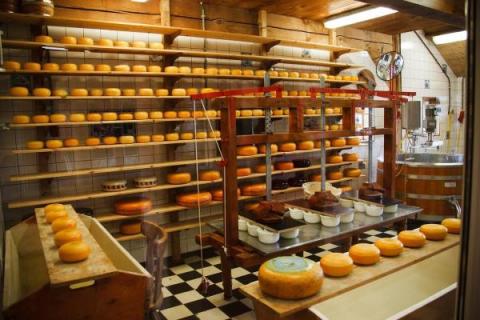
Are you curious about the technology that powers the food industry? From farm to fork, the use of cutting-edge tech has revolutionized how we produce, process, and consume our favorite meals. Whether you're a food enthusiast, a health-conscious individual, or simply intrigued by the latest innovations, understanding the role of technology in the food industry is vital. In this blog post, we'll explore eight important things you should know about the tech used in the food industry.