Operations | Monitoring | ITSM | DevOps | Cloud

k3s vs k8s - The Difference Between k3s vs k8s

Our CTO Andy Jeffries explains how k3s by Rancher Labs differs from regular Kubernetes (k8s). Since we launched the world’s first k3s powered, managed Kubernetes service – we’ve had a lot of questions from our members on what the differences are between k3s and k8s (full blown Kubernetes), aside from the choice from each on how to capitalise a "K" (or not).
Understanding Azure Fault and Update Domains:

Microsoft Azure is a cloud computing platform that offers a wide range of services to businesses of all sizes. One of the critical aspects of any cloud service is high availability and resiliency, which ensures that your applications and data are always accessible, even in the event of hardware failures or updates. Azure provides two critical features to achieve high availability and resiliency: Azure Fault and Update Domains.

Log Aggregation: Everything You Need to Know for Aggregating Log Data

Log aggregation is the process of consolidating log data from all sources — network nodes, microservices and application components — into a unified centralized repository. It is an important function of the continuous and end-to-end log management process where log aggregation is followed by log analysis, reporting and disposal. In this article, let’s take a look at the process of log aggregation as well as the benefits.

The future of AI

It’s no secret that every ITOps leader can face an ever-increasing amount of alerts. Since the dawn of digital, alerts have served an important purpose. Sometimes all those alerts can become overwhelming noise, and sorting out what is and is not a priority can become challenging. The good news is that artificial intelligence (AI) and machine learning (ML) are adept at processing large data sets in real time, looking for patterns and being able to aid in decision making.

Centralized user management has arrived at Upsun

Securely managing the people who have access and permissions to each of your applications can get very confusing, very fast for administrators. That’s why we’re delighted to be introducing centralized user management for all Upsun users which was designed to solve this exact problem. Ready to find out more? The answers are just one play button away in our demo video below.

How Coveo Reduced User Latency and Mean Time to Resolution with Honeycomb Observability

When you’re just getting started with observability, a proof of concept (POC) can be exactly what you need to see the positive impact of this shift right away. Coveo, an intelligent search platform that uses AI to personalize customer interactions, used a successful POC to jumpstart its Honeycomb observability journey—which has grown to include 10,000+ machine learning models in production at any one time. Wondering how Coveo got there? So were we.

Experience faster, more reliable builds with Cargo's new sparse registry protocol

With the Rust team's announcement of the 1.68.0 version of Rust, Cloudsmith is happy to announce our support for the new "sparse" registry protocol, which has been stabilized as part of version 1.68.0. Cargo is the package manager for Rust, a programming language empowering everyone to build reliable and efficient software. Cloudsmith customers who migrate to the new beta "sparse" registry implementation will dramatically improve the speed and reliability of their builds.

Driving MSP Growth in 2023

The past few years have been a boon to the IT channel. Economic and social changes have driven more SMBs and enterprises toward outsourced IT solutions. New technologies have pushed IT profitability higher. Businesses are more focused on digital transformation than at any other point in history, while at the same time everyone with a networked device is concerned about the growing threat of cyberattack. Operations of all types know that the IT department is becoming the key to staying competitive.

AWS Fargate monitoring: How to collect serverless logs, metrics, and traces in Grafana

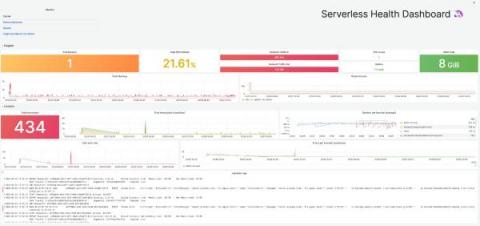
Interoperability — it’s one of the main reasons I joined Grafana Labs. Our “big tent” philosophy helps Grafana work with a wide range of data sources and tools, and it’s why you can use Grafana to address endless use cases and problems. We are best known for the seamless way we correlate metrics, logs, and traces to understand what is happening in the environment, resolve the immediate issue, and address any underlying issues so that it does not happen again.