Technologies like virtualization and containerization have gained significant traction over the last decade as foundational tools for modern application development. As companies like Amazon (AWS), Microsoft (Azure), and Google (Google Cloud) started to invest in the hardware and software infrastructure required to support access to these virtualized resources, “the cloud” was born.
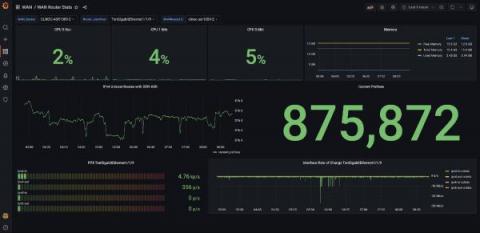
How many Marvel movies’ worth of Internet traffic do 28,000 conference goers create during a five-day Cisco Live event? There’s a Grafana dashboard for that. Cisco Live is the network industry’s largest annual event, delivering education and inspiration to technology innovators worldwide with a week’s worth of programming keynotes, product announcements, entertainment, and more.
Panenco is a Product as a Service studio with more than 50 software development, product management, data science, design, and marketing experts building and hosting applications spanning multiple industries, including healthcare, fintech and education. For them, customer success isn’t just a business function, teams focus heavily on providing a fast, frictionless app experience.
As a developer, Python for me is a heavy-lifting and versatile language. I’ve used it for building APIs, internet of things projects, file and data conversions, machine learning and (of course) web development. Like with any modern, commonly used language, the functionality behind the application is only as good as the infrastructure that it is deployed onto.
The two words that IT and MSP teams never want to hear are “data loss.” According to Business Partner Magazine’s article on data backup, “94% of companies that fail to recover from a major data loss do not survive, and 43% of companies never resume their operation after a major data loss event.” To prevent these disasters from occurring, IT & MSP teams rely on data protection.
When talking about managing web applications and the services they provide, the term “API gateway” is often thrown around, but what does it mean? In order to unpack how a gateway functions, we first need to understand what an API is.
More than 500,000 citizens of the working-class district of Povo do Acre, located in the northwest of Brazil, have an Internet connection thanks to the collaboration of the Spanish company Pandora FMS.