Operations | Monitoring | ITSM | DevOps | Cloud

The latest News and Information on Monitoring for Websites, Applications, APIs, Infrastructure, and other technologies.

Grafana SLO Demo: Prioritize critical resources with SLO-driven IRM | ObservabilityCON 2023

A majority of respondents in our Observability Survey said they were using SLOs or moving in that direction. For good reason: By highlighting the most critical error budget burndown, service level objectives (SLOs) can help you prioritize performance issues based on business impact. In this recording, Josh Abreu Mesa and Reem Tariq walk through how Grafana Cloud’s integrated SLO and Incident Response Management (IRM) capabilities can help you identify the most important issues and resolve them quickly.

User-centered observability: load testing, real user monitoring & synthetics | ObservabilityCON 2023

Understanding your end users’ experience with your applications and services is critical, and there are a variety of tools to help. But there are also a number of different use cases: During development or in production? Simulate user behavior or monitor real user behavior? What should you use and when? This recorded session explores when and how to apply load testing, synthetic monitoring, and real user monitoring to gain insights into the end user experience of your critical applications.

Application Observability and Beyla Demo | ObservabilityCON 2023

In cloud native environments, finding and resolving issues across services and between application and infrastructure dependencies can be challenging. In this recording, we provide demos on Grafana Cloud’s latest capabilities for correlating application and infrastructure observability: Application Observability and Beyla — both generally available. You will hear how Grafana unifies and contextualizes service relationships and application and infrastructure dependencies to help you resolve problems faster.

5 Simple Steps to Reduce Your AWS S3 Bill

Understanding your AWS S3 billing is crucial to effectively manage and reduce your costs. Charges in AWS S3 are primarily based on three factors: the amount of data you store, the number of requests you make, and data transfer fees. Storage costs are calculated per gigabyte (GB) stored, which are tiered depending on the total size of your data. Requests costs are incurred with each put, get, or list operation on your objects, with prices varying based on the type of request.

Centrally govern and remotely manage Datadog Agents at scale with Fleet Automation

As customers scale to thousands of hosts and deploy increasingly complex applications, it can be difficult to ensure that every host is configured to give you the visibility you need to monitor your infrastructure and applications. To ensure visibility across a growing number of hosts, you need to know that your observability strategy is implemented uniformly across your entire fleet of Datadog Agents installed on these hosts.

Secure and monitor infrastructure networking with Buoyant Enterprise for Linkerd in the Datadog Marketplace

As organizations adopt Kubernetes, they face gaps in security, reliability, and observability such as unencrypted communication, lack of multi-cluster support, and missing reliability features like circuit breaking. Buoyant Cloud is the dashboarding and automated monitoring component of Buoyant Enterprise for Linkerd, which helps organizations secure and monitor communication between Kubernetes workloads.

Track Frontend JavaScript exceptions with Playwright fixtures

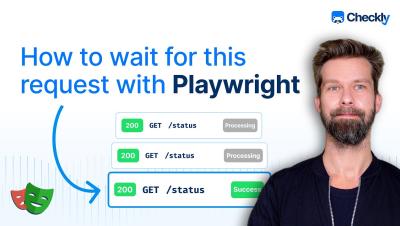
Table of contents Frankly, end-to-end testing and synthetic monitoring are challenging in today’s JavaScript-heavy world. There’s so much asynchronous JavaScript code running in modern applications that getting tests stable can be a real headscratcher. That’s why many teams rely on testing mission-critical features and treat “testing the rest” as a nice to have. It’s a typical cost-effort decision.

What is CI/CD observability, and how are we paving the way for more observable pipelines?

Observability isn’t just about watching for errors or monitoring for basic health signals. Instead, it goes deeper so you can understand the “why” behind the behaviors within your system. CI/CD observability plays a key part in that. It’s about gaining an in-depth view of the entire pipeline of your continuous integration and deployment systems — looking at every code check-in, every test, every build, and every deployment.

The Leading Jaeger Dashboard Examples

Unlocking the full potential of observability and tracing in modern software ecosystems has become imperative for businesses striving to deliver improved reliability and user experience. In this comprehensive roundup, we will dive into the world of Jaeger-incorporated observability and tracing dashboards, offering a curated selection of the best use cases that empower DevOps teams, engineers, and developers to gain unparalleled insights into the inner workings of their applications.

Active vs. Passive Monitoring: What's The Difference?

Today, it’s perfectly normal for businesses to continuously monitor software applications and IT infrastructure to ensure uninterrupted customer service. Active and passive monitoring are the two popular methods enterprises use for infrastructure and application performance monitoring (APM). As the names indicate, these two approaches to monitoring are very different.