Basic Windows monitoring
Pandora FMS has features specifically focused on Windows monitoring, both remotely and locally, by installing software agents. Let's check out together what Pandora FMS offers for full Windows server monitoring.


The latest News and Information on Monitoring for Websites, Applications, APIs, Infrastructure, and other technologies.
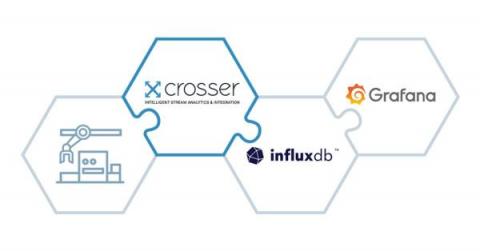
Crosser is a Swedish company that builds a streaming analytics platform. The idea behind Crosser is to take the data from a connected, sensor-rich world and integrate it in real time to deliver faster insights and innovation. Primarily focused on the industrial IoT (IIoT) space, Crosser helps manufacturers gain insight into their machines and processes to drive improvements and to take advantage of newer trends and requirements that companies have for their data.
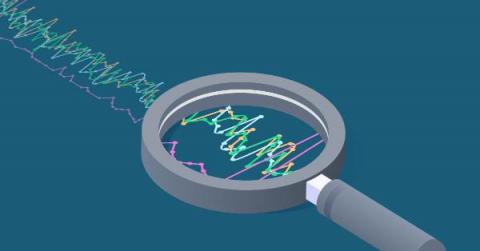
Observability data provides the insights engineers need to make sense of increasingly complex cloud environments so they can improve the health, performance, and user experience of their systems. These insights can quickly answer business-critical questions like, “what is causing this latency in my front end?” Or, “why is my checkout service returning errors?” Observability is about accessing the right information at the right time to quickly answer these kinds of questions.
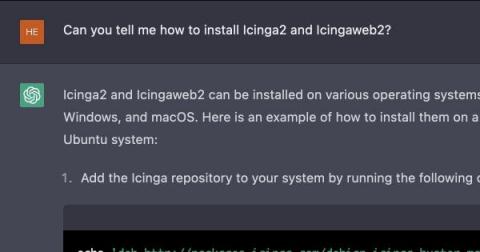
The news have been full of coverage: ChatGPT (Generative Pre-trained Transformer), the prototype chatbot released by OpenAI in November 2022 seems to hail in a new era of information sourcing, schooling and learning, and interacting with a computer. The service sprinted to one million users in five days after the launch, with many more following until this date.
Observability has become a bit of a buzzword in the industry for the last few years. Exactly what "observability" means depends on who you ask, but most people would agree its about both: There's plenty of content out there telling you how to implement observability, or what good looks like. But what about bad observability? What are some anti-patterns to watch out for?
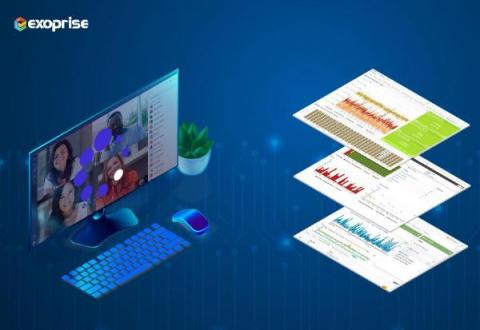
If you have been following the news over the last few months, you will agree that the buzzwords for this year are – inflation and recession. Yet, even in these turbulent times, delivering an excellent digital employee experience (DEX) remains an essential aspect of IT. As organizations continue to add various collaboration, communication, and end-user technologies to the mix, new problems will surface.
"How do we keep our data secure?" is the question nearly every organization is asking these days. The last spot any organization wants to be in is that of a security breach. Stephane Nappo, an industry known Chief Security officer, is often heard saying "It takes 20 years to build a reputation and a few minutes of cyber-incident to ruin it". And here he's just referencing the fall out of a business's image from a breach and not even touching on the mass harm that can be done with stolen data in the wrong hands.
Does your organization’s data include sensitive information, like intellectual property or personally identifiable information (PII)? Do you want to protect your data from being stolen and sent (i.e., exfiltrated) to external web services? If the answer to these questions is yes, then Elastic’s Data Exfiltration Detection package can help you identify when critical enterprise data is being stolen and exfiltrated.
An important part of the client-service provider relationship is a well-written Service Level Agreement (SLA). Most service providers and clients agree on this. What some service providers don’t know is exactly how they should measure SLA. There is often a lot of confusion between the SLA metrics that define contractual agreements and the wide range of key performance indicators (KPIs) you can also use to monitor operations. They are both important, but they are not the same.
Most SaaS products have nice, organic growth when they work well. Employees log in, they click around and make stuff, then they share links with others who do the same. After a few weeks or months, there are thousand of objects. Some are abandoned, and some are mission-critical. Different people also bring different perspectives, so they name things that are relevant to their role and position in the team, which may be confusing to others outside their realm.