Operations | Monitoring | ITSM | DevOps | Cloud

The latest News and Information on Monitoring for Websites, Applications, APIs, Infrastructure, and other technologies.

Customers Demand Interoperability and Open Standards Are the Key

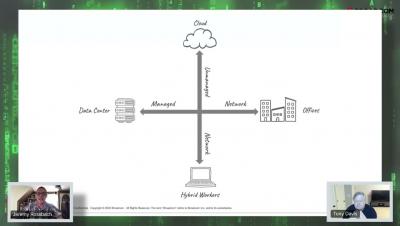
When I speak with customers, especially chief information security officers (CISOs), one of their most consistent requests is that they want interoperability. They want the software they buy to work with the software they have and plan to buy in the future. Nearly every organization, certainly every enterprise company, has an installed base of hardware and software representing a significant investment in time and money.

Elastic Observability: What is it, and How Do You Get Started?

Elastic provides a rich set of Observability features beyond logging, such as metrics, tracing, OTel support, and rich ML/AIOps features. Getting started is easy as deploying a singular agent to collect and ingest metrics, logs, and traces from multiple sources such as K8S, AWS, and Applications. Watch this video to see how simple it is.

Tales from the Kernel Parameter Side

Users live in the sunlit world of what they believe to be reality. But, there is, unseen by most, an underworld. A place that is just as real, but not as brightly lit. The Kernel Parameter side (apologies to George Romero). Kernel parameters aren’t really that scary in actuality, but they can be a dark and cobweb-filled corner of the Linux world. Kernel parameters are the means by which we can pass parameters to the Linux (or Unix-like) kernel to control how that it behaves.

What is Kafka?

Apache Kafka is a popular open source platform for streaming, storing, and processing high volumes of data. In this video, we break down how Kafka works and how it’s able to provide you with a reliable, scalable, and highly performant service for managing events. We also touch on some key resources for effectively monitoring your Kafka deployments via Datadog.

On Building a Platform Team

It may surprise you to hear, but Honeycomb doesn’t currently have a platform team. We have a platform org, and my title is Director of Platform Engineering. We have engineers doing platform work. And, we even have an SRE team and a core services team. But a platform team? Nope. I’ve been thinking about what it might mean to build a platform team up from scratch—a situation some of you may also be in—and it led me to asking crucial questions. What should such a team own?

What can Elastic Synthetics tell us about Kibana Dashboards?

I like to leverage our technologies to ensure our products have a pleasant user experience. Elastic Synthetics enables you to configure it in an out-of-the-box experience directly through your Elastic Cloud deployment without the need to install anything! It also works across the globe with multiple locations you can choose from. Ever wondered how fast your web service is when accessed from Japan, Germany, or the eastern U.S.? Now you can do this by simply clicking on a checkbox.

Getting Started with Python and Geo-Temporal Analysis

This article was originally published in The New Stack and is reposted here with permission. Working with geo-temporal data can be difficult. In addition to the challenges often associated with time-series analysis, like large volumes of data that you want real-time access to, working with latitude and longitude often involves trigonometry because you have to account for the curvature of the Earth. That’s computationally expensive. It can drive costs up and slow down programs.

Observing AWS Lambda IOT devices

The internet of things is one of my favorite topics. IOT enables low-powered connected devices that opens gateways from the digital to the real world. While I love tinkering away with an Arduino sketch and the latest Espressif or Arduino board, there is always an air of frustration when trying to build out what at first seems like simple functionality using one of these “smart devices” because of the limited view we have into their operations.

Why Observability Engineers Are Crucial for Great Data Management

If you’re unfamiliar with observability, you might think an “observability engineer” is just a fancy way to say data admin — but while observability engineers often work with data admins, they work toward different goals. Data admins monitor information to identify and fix known security issues. Observability engineers work to provide a complete picture of all the data a company aggregates and what it means for a business.