Operations | Monitoring | ITSM | DevOps | Cloud

The latest News and Information on Monitoring for Websites, Applications, APIs, Infrastructure, and other technologies.

Observability: You Can't Buy It, You Must Build It!

In Part 1 of this series, we talked about the origins of observability and why you need it. In this blog (Part 2), we will cover exactly what observability is, what it isn’t, and how to get started. Before we can dive into how to approach observability, let’s get one thing clear: You can’t buy a one-size-fits-all observability solution.

Debunking 4 Cybersecurity Myths About Machine Learning

Machine learning has infiltrated the world of security tooling over the last five years. That’s part of a broader shift in the overall software market, where seemingly every product is claiming to have some level of machine learning. You almost have to if you want your product to be considered a modern software solution. This is particularly true in the security industry, where snake oil salesmen are very pervasive and vendors typically aren’t asked to vigorously defend their claims.

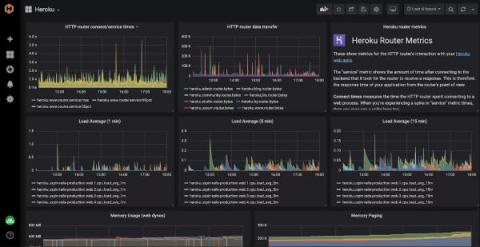
Monitor Ruby Application Performance with Magic Dashboards

Application teams must understand what their customer experience is like. This is true not only from a general perspective (in terms of usability and responsiveness) but also on a day-to-day, minute-by-minute basis. In particular, when you work with distributed systems, errors are inevitable. Site traffic fluctuates throughout the day, and any one of a system’s dependencies could also encounter an issue at any time.

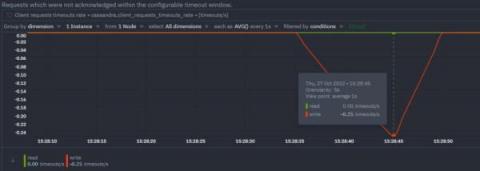
How Ekopak Manages Water Treatment Data with InfluxDB

A wide variety of industrial processes rely on water, and before it can be used, it needs to be treated to remove dissolved substances. Minerals have to be filtered out so they don’t form scales on equipment as water is heated and cooled, and bacteria needs to be removed in cases involving human health. Ekopak is a Belgian company working to make water treatment more sustainable by using less water and energy where possible.

Digital Dexterity Enhances Remote and Hybrid Work

The leap to remote work happened nearly overnight with the pandemic, and it’s clear that hybrid work and digital dexterity is the way of the future. As a result of this shift in the way we work, companies have invested in new technologies to adapt to the growing remote world, with 69% of companies planning to increase their investment in digital tools even more in 2022. Additionally, over 90% of businesses strive to implement hybrid work environments.

Using Splunk Observability Cloud to Monitor Splunk RUM

As a principal engineer on the Splunk Real User Monitoring (RUM) team who is responsible for measuring and monitoring our service-level agreements (SLAs) and service-level objectives (SLOs), I depend on observability to measure, visualize and troubleshoot our services. Our key SLA is to guarantee that our services are available and accessible 99.9% of the time.

Splunk Synthetic Monitoring in Splunk Observability Cloud - Product Demo

Splunk Synthetic Monitoring is now available in Splunk Observability Cloud allowing IT and engineering teams to proactively detect issues impacting web and API performance and end-user experience and troubleshoot and remediate issues in the web browser, the server, or a third-party dependency—all within a single UI. Watch this quick demo to learn more.

Enterprise vs. SMB IT: What's the Difference?

Enterprises have always had more money to spend on IT than small-and-medium businesses (SMBs). This has traditionally resulted in a disparity in the technology and services available to each. However, with the rise of cloud-based services and the increasing need for remote working, this gap is starting to close. While there are still some differences between enterprise IT management and SMB IT management, the two are becoming more similar.