Operations | Monitoring | ITSM | DevOps | Cloud

The latest News and Information on Monitoring for Websites, Applications, APIs, Infrastructure, and other technologies.

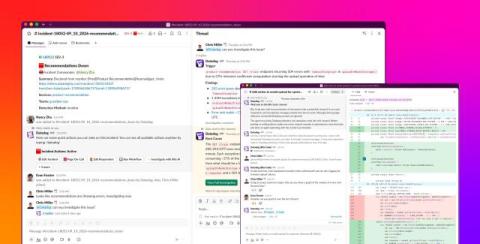
Honeycomb Achieves the AWS Financial Services Competency

Honeycomb is proud to share that we have achieved the Amazon Web Services (AWS) Financial Services Competency. This recognition validates our technical expertise and proven customer success in assisting financial services organizations with building, running, and understanding their production systems on AWS. Securing this competency is a direct response to our customers’ feedback in this space: observability in regulated, high-stakes environments requires more than dashboards and alerts.

3 things you need to know about headless observability

If you're building agents trying to figure out the best way to actually make them successful in production, you're going to want to know about headless observability. Headless observability means an agent can access information about the health of your system through a CLI instead of clicking around dashboards. It's the data layer that going to unlock serious autonomy and allow you to scale with agentic workloads.

Honeycomb Innovation Week: Announcing Our Partnership With Embrace

Honeycomb and Embrace are extending the rigorous, data-driven practice that Honeycomb pioneered for foundational to mobile and web, giving, site reliability, and platform teams a complete, correlated picture of system health. The strategic partnership makes understanding performance and reliability for every user and every screen part of the observability practice, bringing new depth and standardization to how teams measure end user impact.

New ways to agentically build and edit dashboards

The traditional dashboard workflow, teams slowly handcrafting visualizations to track critical KPIs, is dying in a world of AI agents. A few years ago, in a pre-agentic-everything world, we tried to make it easier for developers to monitor critical experiences. We introduced Insights pages, which were pre-configured dashboards any Sentry user could adopt instantly that surfaced common health signals, like Web and Mobile Vitals.

Simplify micro-frontend observability with Datadog RUM

Micro-frontend architectures, where independent teams build and deploy separate parts of a frontend application, introduce an observability challenge: Telemetry data is fragmented across services, making it difficult to determine which micro-frontend caused a performance degradation or error spike.

Attribute AI costs across providers with Datadog Cloud Cost Management

AI adoption is accelerating across organizations, and spending often follows a similar pattern: rapid growth, multiple providers, and limited visibility into where costs originate. Each provider exposes billing data differently, with distinct schemas, dimensions, and interfaces. FinOps and engineering teams often spend significant time consolidating fragmented data, only to end up with partial attribution and limited context about who or what generated the AI spending.

Improvements to our status pages as we tackle a DDoS

The uptime & availability of our status pages hasn't been great these past few days. The root cause is a persistent and pretty aggressive DDoS attack targeted at our own status page, status.ohdear.app. As a result, the overload on our systems also affected all other status pages we host for clients. We're not yet at Github or Claude levels of uptime sadness, but this isn't acceptable to us. In this post, I'll share what's happening and what steps we've already taken.

You Are Building With AI. Who Is Watching What It Ships?

AI coding assistants have made it possible for a single developer to build and ship a production application in a weekend. Claude Code, Cursor, GitHub Copilot, and similar tools can scaffold a Rails app, write the models, generate the views, wire up the API, and push to production before Monday. This is genuinely exciting. It is also genuinely dangerous if you do not have monitoring in place before you ship.