Operations | Monitoring | ITSM | DevOps | Cloud

Bridging AI and Infrastructure: Introducing the Megaport MCP Server for Agentic Networking

Discover the Megaport MCP Server and how it enables AI-powered, agentic networking through natural language access to network infrastructure. By Miwa Fujii, Community Manager - Terraform and Ryan Tucker, Solutions Architect In the cloud networking era, we’ve moved from manual configurations in the Portal to Infrastructure as Code (IaC), Terraform. But the next frontier isn’t just code, it’s intelligence. We are pleased to announce the release of the Megaport MCP Server (Open Beta).

Checklist: how to reduce environment drift without slowing devs or AI agents

Environment drift persists when teams standardize code but leave infrastructure, data, and access decisions to individual teams and manual setup. Most teams know their environments are not identical. What they underestimate is how quietly the gap widens. A database version is out of sync between production and staging; an environment variable is added manually to one server but never tracked; a cron job runs in production but was never captured in the dev config.

Shai-Hulud Miasma: Inside the Compromise of Red Hat's Packages | Harness Blog

The Shai-Hulud lineage has a new face. On June 1, 2026, security teams independently flagged a fresh supply chain compromise inside the @redhat-cloud-services npm namespace. 32 packages and 96 versions were all republished with a credential-stealing worm. These aren't typosquats. They are the official packages in a trusted scope, pulling somewhere 80,000-117,000 average weekly downloads.

5 questions you should be asking about cloud dependency

Cloud infrastructure has become the backbone of modern business operations. But as organizations deepen their reliance on cloud providers, a critical question often goes unasked: just how dependent are we, and at what cost? For years, the cloud adoption narrative focused on agility, scalability, and cost efficiency. Those benefits remain real. But the landscape is shifting.

Protecting against HTTP/2 Bomb vulnerability (CVE-2026-49975) with HAProxy

On June 2, 2026, security researchers disclosed a remote denial-of-service (DoS) exploit named the HTTP/2 Bomb. This flaw allows unauthenticated remote attackers to rapidly exhaust server memory, rendering major web servers inaccessible.

NVIDIA Approach for Achieving ASIL B Qualified Linux | Ubuntu Summit 26.04

Can a general purpose, open source operating system like Linux be deployed in safety-critical products? Can it achieve certifications to standards like ISO 26262? This question has become increasingly common in recent years. In this talk, Bryan provides a safety integrity qualification approach for Linux. It is composed of Linux Kernel, user space libraries (like libc) and user-space components (like init processes), up to ASIL B according to ISO 26262:2018.

Why Engineers Don't Trust Autonomous AI - 4th Annual Observability Survey | Grafana Labs

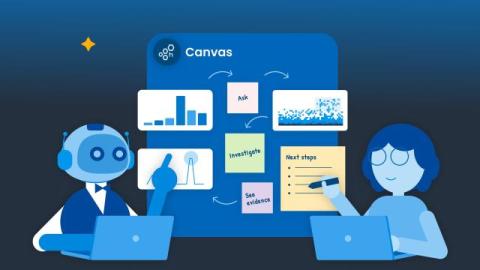
The 2026 Observability Survey from Grafana Labs heard from over 1,300 engineers and leaders across 76 countries on the real-world role of AI in observability. The data reveals a sharp distinction between intelligence and autonomy — and a critical blind spot most teams have.

Asimov's Zeroth Law of Robotics: testing and observing AI (ExpoQA 2026)

Asimov's Three Laws of Robotics are missing one — and when it comes to testing and observing AI, Nicole van der Hoeven argues that missing rule changes everything: before a robot can avoid harm, obey orders, or protect itself, there has to be a Zeroth Law: a robot must be observable. Because if you can't see what a system is doing, you have no way of knowing whether it's following any rule at all.