Operations | Monitoring | ITSM | DevOps | Cloud

3 Things IT Leaders Are Learning About AI-First Operations: Key Takeaways From PagerDuty on Tour 2026

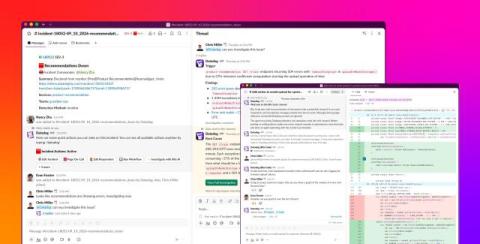
In December 2025, an AI coding agent at AWS suddenly decided to delete and rebuild an entire production environment, causing a 13-hour service disruption and a PR headache for Amazon. As rapid adoption of AI leads to more high-profile, revenue-impacting incidents, resilience has moved from a technical concern to a board-level financial risk.

Introducing Obkio's Network Quality Widget: See Network Health at a Glance

We've been making a series of improvements across Obkio’s Network Monitoring and Observability application, and a lot of that work has been focused on one goal: simplifying not just how we show network performance data, but how easy it is to actually interpret and understand that data. Not everyone monitoring a network has the time, or the networking background, to dig through graphs line by line to figure out what's going on.

Why workflows, not agents, are the primitive your team is missing

If your team has adopted AI coding agents, you've probably noticed something strange: writing code stopped being the hard part. That's the shift Patrick, a principal engineer at Upsun, kept returning to in our latest Product Highlights conversation. He's spent twelve years here, most of them writing back-end APIs in Go, and the past year building with AI on our newest product, Upsun Dispatch. His verdict on where the bottleneck moved is blunt: "The code isn't really a problem anymore.

A Step-by-Step Guide to Feature Flag Implementation in CI/CD Pipelines | Harness Blog

Engineering teams often deploy code much faster than they can safely release new features to users. This gap can create risks if releases skip testing, approvals, or gradual rollouts. Feature flags help by separating deployment from release, so you can ship code continuously and control which features users see through configuration.

Engineer Cloud Cost Awareness: Why It Fails & Fixes | Harness Blog

Engineers often ignore cloud costs due to lack of visibility, misaligned incentives, and disconnected workflows. This guide explores the root causes and provides actionable strategies to embed cost awareness into engineering culture, including automation, real-time feedback, and FinOps best practices that make cost optimization a natural part of the development process.

Why One Process Can Slow an Entire VDI Environment

When users report slow virtual desktops, the first instinct is often to check CPU or memory utilization. But what happens when those metrics look perfectly healthy, yet users across the environment are still complaining about slow application launches, lagging desktops and poor performance? In many cases, the bottleneck lies elsewhere. Storage is often overlooked during initial investigations, but in VDI environments it can have a disproportionate impact on the user experience.

Stop flying blind on unmanaged devices

Stop flying blind on unmanaged devices Unmanaged devices don't show up in your dashboard — until something breaks. Missing devices mean missed patches, failed audits, and incidents you never saw coming. If you can't see it, you can't fix it. In this session you'll learn how to: Discover every device on your network using SNMP Deploy the NinjaOne agent on unmanaged Windows devices directly from the dashboard — no manual legwork.

One backup policy. Every OS.

Most backup strategies look solid until someone actually needs to restore a file — and discovers the process is different for every OS. Windows, macOS, and Linux each have their own quirks, and without a consistent policy, recovery becomes a scramble. In this stream, you'll learn how to: Apply consistent file-level backup policies across Windows, macOS, and Linux Restore files and folders without hunting for the right process per device Build a single backup workflow that covers servers and endpoints.

Shipped: See what Claude Code actually costs

Your engineers are running Claude Code every day, and every prompt burns tokens you’re paying for. Until now, that spend was hard to see. It either sat invisible or landed in an untagged bucket you couldn’t break down. Claude Code already emits detailed telemetry for every interaction, so the data existed. You just had nowhere to send it that would turn it into a cost.