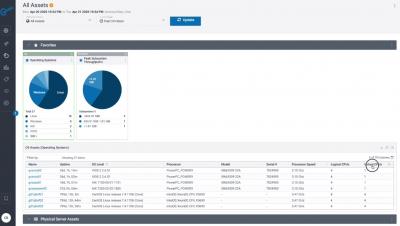
Galileo Performance Explorer Table Enhancements
Check out the latest performance and customization enhancements to tables in Galileo Performance Explorer!


As a developer-focused company, InfluxData is always interested in how the community is doing. During the first two weeks of April, we conducted an online survey to find out how developers are handling life and work during the COVID-19 pandemic. A total of 324 self-identified software developers/engineers from across the world responded (46% from North America, 44% from Europe, 9% from South America, and 1% from Africa) to share their feelings during this unprecedented global event.
With most of the world on lockdown due to the COVID-19 virus, many aspects of IT services and digital transformation have been put into the fast lane. There are reports of massive surges in the use of tools such as Zoom, Microsoft Office 365, etc. in order to communicate and collaborate. At the same time organizations are required to scale up access to their internal applications.
Ransomware is a serious threat to institutions of all kinds, resulting in mounting costs for organizations that must literally pay ransom to regain access to their essential systems. A ransomware attack takes place when a cybercriminal denies an organization access to the data it needs to conduct business, usually by encrypting the data with a secret key. The attacker then offers to reveal the encryption key in exchange for a payment. The payment can vary in amount or kind.
Businesses who operate along supply chains, like manufacturers, distributors, and retailers, have innovative systems and processes for predicting demand and keeping consumers satisfied. Until a crisis hits. When demand for essential SKUs spikes due to panic buying and fear-based hoarding, organizations in essential consumer categories can find themselves forced to make critical decisions without reliable information to base them on, significantly increasing their risk exposure.
It’s pretty safe to say that March was the month where everything changed for most of us. By now, enough has been said on coronavirus and we need not add to the pile. Our concern remains continuous uptime, and reporting on outages as teachable moments. During this time of heightened tensions, let’s take a few moments to do some post mortem work and see what we can learn from March’s outages.
In the previous blog of this series, we discussed how monitoring SQL Server activities helps secure databases. The database security can further be reinforced by carefully configuring the authentication and authorization mechanisms for database accesses. In this blog, we’ll briefly explain the various authorization and authentication mechanisms of SQL Server and some best practices you can follow.