
Operations | Monitoring | ITSM | DevOps | Cloud

Implementing Distributed Tracing in a Java application

Monitoring and troubleshooting distributed systems like those built with microservices is challenging. Traditional monitoring tools struggle with distributed systems as they were made for a single component. Distributed tracing solves this problem by tracking a transaction across components. In this article, we will implement distributed tracing for a Java Spring Boot application with three microservices.

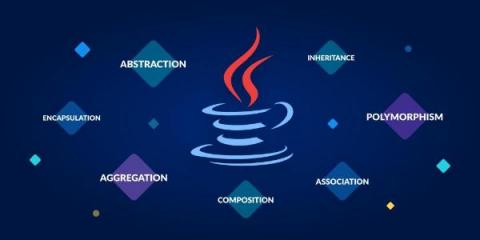
Using OOP concepts to write high-performance Java code (2023)

Java is a class-based object-oriented programming (OOP) language built around the concept of objects. OOP concepts are intended to improve code readability and reusability by defining how to structure your Java program efficiently. There are seven core principles of object-oriented programming, as follows.
Sponsored Post

What are microservices? The pros, cons, and how they work

Microservices are a popular software design architecture that breaks apart monolithic systems. A microservice application is built as a collection of loosely coupled services. Each microservice is responsible for a single feature. They interact with each other via communication protocols such as HTTP.

Best Java GC Log Analyzers: Top Analysis Tools You Need to Know in 2023

Table of Contents When an application written for the Java Virtual Machine is running, it constantly creates new objects and puts them on the heap. Well, at least in the vast majority of the cases. Such objects can have a longer or shorter life, but at some point, they stopped being referenced from the code. Unlike languages like C/C++, we don’t have exact control over when the memory will be freed – freeing the memory is the garbage collector’s job.

How JMX Monitoring Works for Java Applications

The Java Management Extensions (JMX) framework is a Java technology that includes tools for managing and monitoring applications, system objects, and service-oriented networks. The JMX framework is designed to simplify the management of local and remote Java applications. The JMX framework introduces the concept of MBeans for real-time management of applications, whereby resources are represented by objects called MBeans (Managed Beans).

Java vs Python: Code examples and comparison

As two of the most popular and practical languages out there, should you choose Java or Python for your next project? Is one of these languages a clear-cut better option? The answer is a long one. According to GitHub’s annual Octoverse report, Python has now climbed to the second most popular language in usage, pushing Java down to third place.

17 Popular Java Frameworks for 2023: Pros, cons, and more

In 2023, Java is still the third most popular programming language in the world. It encompasses a vast ecosystem and more than 9 million Java developers worldwide. Java’s popularity comes down to a few key advantages; it’s a platform-independent language (write once, run anywhere) that follows the object-oriented programming paradigm and is straightforward to understand, write, and debug.