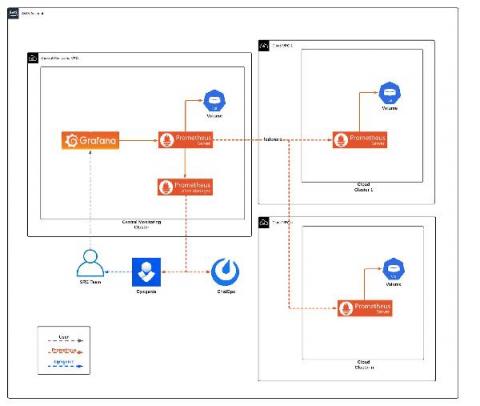
You’ve probably heard about Prometheus, the leading open source project focused on metrics and alerting, and how it has changed the way the world does monitoring and observability. But if you’re brand-new to the technology, how can you dip your toes in and get started? I was in this position not long ago myself. I am a very hands-on type of learner, and usually when I want to explore new technologies, I start with “hello world” apps and small toy projects.
Hardware virtualization, also known as hardware assisted virtualization, is the creation of virtual versions of operating systems and computers. The technology was made by AMD and Intel for their server platforms. Its purpose was to improve the processor’s performance and meet virtualization challenges such as translating memory addresses and instructions. Many IT businesses have deployed servers that run only at a fraction of their total capacity.
If you’ve been using SquaredUp for Azure, you’re familiar with its abilities to treat Azure native virtual machines . You can create a number of amazing and useful visualizations with them, such as displaying their health state, performance charts, costs, and so on. This is all excellent and super useful, but one question we frequently get asked is: how do I do these things with my on-prem servers that I’ve connected to Azure Monitor?
And you thought you were having a bad day…did you see what happened to the developers over at Nissan? The source code (Git repos) for Nissan’s mobile apps and internal tools was leaked to the Internet because the link was publicly accessible and the password easy to guess. 😬 Yikes.
Software developers are often only concerned about the functionality of their applications. When these applications are deployed in production, scalability and performance issues surface and application developers then have to worry about performance. Many a times, such situations warrant a complete restructuring of the application code, causing significant impact to new rollouts and current users.