Operations | Monitoring | ITSM | DevOps | Cloud

Prevent outages with PagerDuty incident retrospectives

Recurring incidents are a symptom of a broken process. Your teams are working hard to get services back online, but constantly battling the same problems is frustrating and not a sustainable approach. What’s reflected here is not a failure in engineering abilities, but a deficiency in the learning that should follow an incident. When incident analysis focuses on finding a single person or team to blame, it creates a culture of fear.

Resolve Webinar: Introducing AgentLab: The Foundation of the Autonomous Service Desk

Most service desks still operate across fragmented systems. A single ticket can touch 4–7 tools, often more, slowing resolution and increasing cost. Copilots suggest. Traditional automation executes fixed paths. Neither closes the loop. AgentLab changes that. In this webinar, we introduce a new model built on agentic AI and orchestration. One where AI agents don’t just assist. They act, adapt, and resolve.

How Criteo handles 23M requests per second (RPS) with HAProxy Runtime API automation

Criteo handles 23 million requests per second (RPS) while maintaining peak performance and minimizing downtime. For most organizations, handling that level of traffic is just a theoretical stress test — a what-if scenario should their infrastructure ever be overwhelmed by an unexpected wave of requests. But for Criteo, 23 million RPS is just another Tuesday.

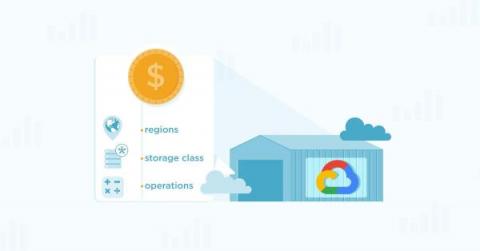
Google Cloud Storage Pricing: The No BS Guide To GCP Storage Costs [2026]

This straightforward guide will help you understand GCP storage pricing without the jargon. Understanding where your cloud spend goes enables you to pinpoint who, why, and what drives your cloud costs. This visibility supports informed decisions about reducing unnecessary spend or increasing investment in high-return areas.

Scaling Remote Teams in Asia: Compliance Challenges and How EOR Models Solve Them

Asia continues to draw global companies looking to scale their remote workforce, thanks to its deep talent pools and cost advantages. Yet hiring across the region brings layered compliance demands that vary from country to country. The employer of record (EOR) model has emerged as a practical fix, helping firms hire legally and quickly without the cost of building local entities from scratch.

How Financial Institutions Are Rethinking Risk Management in a Digital-First World

Financial services have undergone a rapid digital transformation over the past decade. Nowadays, institutions are able to scale up faster and service customers more efficiently through cloud infrastructure, real-time payments, and API-driven platforms. But this shift also introduced a more complex risk landscape. Risk management is no longer confined to compliance teams and periodic audits. It's now embedded in day-to-day operations. As financial institutions modernize, they need to rethink how they identify, monitor, and mitigate risks across their entire tech stack.

Advanced Tracking Systems For Modern Hunters

Hunters find new ways to navigate the woods with high-tech gear. Staying on the right path is much easier when you have mapping tools in your pocket. These systems help you track movement in any weather condition. Modern hardware keeps you safe and helps you find the best spots for your next trip. These devices offer better precision than the old paper maps many used in the past. You can see your exact location with the push of a button.

Operational Safety: Minimizing Premises Liability Risks

Managing a physical business space requires a constant focus on safety and risk reduction. When customers or vendors enter a property, the owner has a legal duty to keep the premises reasonably safe. Failing to meet this standard can lead to costly lawsuits and damage to a brand's reputation. Smart business owners look at safety as a core part of their daily operations rather than a side task.

Notes from the Field: Keyboard mapping issues with IGEL Linux endpoints on Windows Server 2025 VDAs

New Windows Server versions often introduce subtle behavioral changes that only surface when interacting with different endpoint types. In mixed environments where both Windows and Linux-based endpoints are used, these differences can become more apparent. The following case highlights an issue encountered when using IGEL Linux thin clients against Windows Server 2025 VDAs, where keyboard input behaved differently compared to Windows endpoints.
Sponsored Post

Understanding the Three Pillars of Observability: Logs, Metrics and Traces

Many people wonder what the difference is between monitoring vs. observability. While monitoring is simply watching a system, observability means truly understanding a system's state. DevOps teams leverage observability to debug their applications, or troubleshoot the root cause of system issues. Peak visibility is achieved by analyzing the three pillars of observability: Logs, metrics and traces. Depending on who you ask, some use MELT as the four pillars of essential telemetry data (or metrics, events, logs and traces) but we'll stick with the three core pillars for this piece.