Miscommunication isn’t just about the frustration that ensues when direction isn’t followed or understood by colleagues. For the healthcare industry, miscommunication could mean the loss of billions of dollars and endangering the lives of patients. That’s why physicians must implement a clinical communication solution to avoid the risks associated with poor, care team collaboration methods.
One of the key performance indicators of any system, application, product, or process is how certain parameters or data points perform over time. What if you want to monitor hits on an API endpoint or database latency in seconds? A single data point captured in the present moment won’t tell you much by itself. However, tracking that same trend over time will tell you much more, including the impact of change on a particular metric.
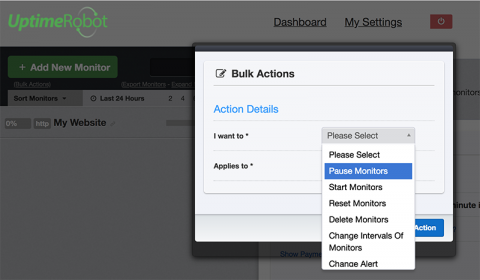
In case you haven’t seen or used it, there is a “Bulk Actions link” just under the “Add Monitor button” in the left sidebar. It simply opens the “Bulk Actions dialog” and presents a set of actions that can be applied to monitors in bulk. This feature is now more powerful with a few important additions.
We all read them, and we all have our favorite technology news and media sites. Now that mobile dominates the market and Google has shifted to ranking based on mobile performance, we thought it would be fun to see how ready the top 50 technology news and media websites are for the shift using our free Website Speed Test Tool.
Node.js is an asynchronous JavaScript runtime that is used to develop highly scalable network applications. To help provide more visibility into these dynamic environments, we’re pleased to announce that Datadog APM has officially released support for monitoring Node.js applications, which joins our existing support for Java, Ruby, Python and Go.
Icinga 2.9.0 provided many many bugfixes and one change has unfortunately been overseen. If you use an init system different to Systemd (e.g. Sysvinit) or the “-d/–daemonize” option in your containers, issue #6445 causes troubles. This is visible with logging, cluster connects, IDO database writing. Users reported problems on CentOS 6, SLES 11, Ubuntu 14, Debian 8, Gentoo (both with Sysvinit).
When we released derived columns last year, we already knew they were a powerful way to manipulate and explore data in Honeycomb, but we didn’t realize just how many different ways folks could use them. We use them all the time to improve our perspective when looking at data as we use Honeycomb internally, so we decided to share. So, in this series, Honeycombers share their favorite derived column use cases and explain how to achieve them.
Outages and postmortems are a fact of life for any software engineer responsible for managing a complex system. And it can be safely said that those two words – “outage” and “postmortem,” do not carry any positive connotations in the remotest sense of the word.