Mailchimp
Not subscribed to OpsMatters Newsletter


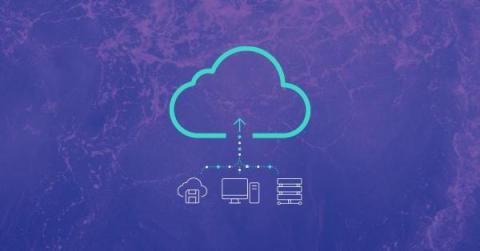
Today, large enterprises are using multiple cloud providers and technologies. Enterprises dealing with distributed loads on their on-prem infrastructure, private clouds, and public clouds need teams that are versed in writing different CLI commands and scripts in multiple languages and require specialists in these fields. Unfortunately, all of this bears a hidden cost since the company has to train its employees in multiple technology stacks to manage different infrastructures.
Intercom’s mission is to build better communication between businesses and their customers. With that in mind, they began their journey away from metrics alone and towards complete observability. The first step was tooling, and they learned quickly that trying to work with multiple solutions was not the answer.
The MSP industry is facing and ongoing movement across customers’ transition to the cloud, the evolving threat landscape, and a skills shortage that seems to be more pronounced than ever. Consider these facts from Gartner: The threat landscape is also evolving as highlighted by some of the following statistics: Data protection is a service that managed service providers (MSPs) need to consider as critical.
When I initially wrote my guide to blocking Microsoft’s auto-update to Windows 11—Windows 11: how to configure an auto-patch decline in N-central—I only had N-central partners and our N-central Patch Management in mind. However, after reading various other forums and discussions, I thought I’d take a more regimented approach to stopping or blocking Windows 11 from your machine.
When looking for cybersecurity software tools in 2022, it is important to know your needs and how the software can protect you against cyberattacks. In an era when people are increasingly reliant on machines, software, computers, and networks, it is important to have solid protection and make sure that your critical data is safe across every device. Today’s blog is meant just for that – to help you see and choose the ideal cybersecurity software solution.