Operations | Monitoring | ITSM | DevOps | Cloud

Latest posts

Win One New Client Every Month - The ultimate MSP marketing strategy in just 60 mins with Paul Green

Looking to grow your MSP? Want to win more customers? Join us for NinjaOne's exclusive webinar with MSP growth strategy expert Paul Green, who will present a turnkey solution on how you can create an effective marketing infrastructure and start winning new customers in no time! Paul has been specializing in MSP marketing and growth since 2016. He is the founder of Paul Green's MSP Marketing, author of the book "Updating servers doesn't grow your business", and the host of his very own podcast!

Code-level Application Monitoring for Every Developer

The monitoring, tooling, and observability space is crowded. It’s hard to keep track of what most tools in this category originally set out to do— but if we had to guess… they were probably built to support monolithic architectures with complex systems, to give Ops and IT a way to minimize the impact of an outage.

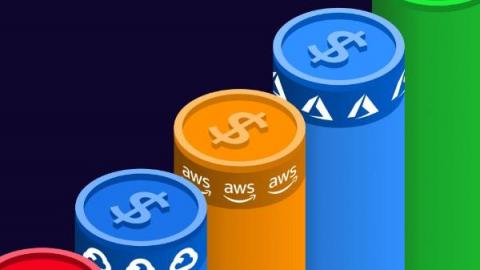
How I monitor cloud application costs in one simple but powerful dashboard

Although there are many great tools out there to get on top of application monitoring, there’s one vital metric that’s often overlooked by us technical folks – cost. In the days of running apps on servers in private datacenters, the kit was a one-time purchase that the systems team had to deal with. But running apps in public clouds is a different story. Whether you’re running on VMs, containers in Kubernetes, or entirely serverless, execution of your code adds to the bill.

DevOps vs. SRE: What's the Difference?

Despite there being significant differences in the roles, DevOps and Site Reliability Engineering are often lumped together because many people assume they do similar work. Although both attempt to reduce the issues arising from software development processes, their goals, skill sets, and approaches are actually quite different. DevOps engineers focus on the development pipeline, and their goal is to enable better development processes and workflows.

Top 20 CI/CD Pipeline Interview Questions & Answers

The key to acing a CI/CD interview is preparation. The first step in preparation is to learn as much as you can about the possible company, including its background, offerings, and hiring practices. In order to help you master your next interview and land your dream job, this blog post includes CICD interview questions, all neatly organized into themes.. Refreshing your technical knowledge is the next item on the list because it will help you stand apart.

Network Log Archiving = Perfect Backwards Visibility

Network monitoring is ideal for getting a real-time view of your connected environment, and with reports, you can look back in time too. Logs are key to this rear-view mirror look, as they contain all the data for all the elements you are monitoring. But without network log archiving, you can only look back so far. Did you know that according to an IBM/Ponemon study, it takes an average of 287 days to discover and contain a data breach?

Tigera: Hands-on workshop: Implementing Security and Observability for Containers and Kubernetes

Attend this in-depth, hands-on workshop with a Calico expert to design and implement container security and zero-trust workload security for your containerized workloads running in self-managed Kubernetes on Amazon Web Service (AWS), Microsoft Azure, Red Hat Openshift or SUSE Rancher RKE. The 90-minute interactive lab comes with your own provisioned Calico Cloud environment and is designed to provide more complete knowledge.

Elastic: Getting started with logging with the ELK Stack: A primer for beginners

The Elastic Stack (also known as the ELK Stack) is used across a variety of use cases - from observability to security, from enterprise search to business analytics. Join us as we go over the basics and show you how to get started using the Elastic Stack for your log and metrics analytics - the first steps on the path to observability.
Sponsored Post

What Are Runbooks and How Does It Apply to Network Operation Centers (NOCs)?

Much like in other production environments, the production of cloud services is based on and orchestrated by a plethora of tools-making part of cloud services' overall cloud infrastructure. Given how cloud services are as complex as they are intricate, a vast range of detailed steps need to be performed in a certain order for the production environment to run smoothly, whether it's carrying out maintenance procedures, updates and upgrades, or resolving issues to prevent downtime.