Mailchimp
Not subscribed to OpsMatters Newsletter


Metrics storage engines must be specially engineered to accommodate the quirks of metrics time-series data. Prometheus is probably the most popular metrics storage engine today, powering numerous services including our own Logz.io Infrastructure Monitoring. But Prometheus was not enough for Slack given their web-scale operation. They set out to design a new storage engine that can yield 10x more write throughput, and 3x more read throughput than Prometheus! In February 2022 Suman Karumuri, Sr.
Elastic released a major version of its platform on February 10, 2022. Version 8.0.0 is the latest major version. There has already been a new minor release to version 8.1.0, and there are anticipated minor and patch releases coming as Elastic rolls out new features and fixes. The latest release is the first significant revision since April 2019, when version 7.0.0 was generally available. Users can find a complete list of release notes on the Elastic website.
Remote network monitoring is a technical specialty that was born almost at the same time as networks themselves. Since then, many strategies have emerged when it comes to monitoring network elements. In this article we will talk about the current techniques based on SNMP polling and network statistic collection through Netflow, and we will also mention outdated systems such as RMON. Most techniques are purpose-oriented, so they are especially useful.
In this blog, we will be introducing the concept of High-performance computing (HPC) and HPC clusters. We will also introduce a few categories of practical workloads important in the HPC space. This blog is a part of a series of blogs on HPC where we will introduce you to the world of HPC.
I’m excited to announce that Ivanti is the recipient of not one, not two, but three “Best-Of” awards from Expert Insights for Spring 2022. Expert Insights’ Best-Of Awards are designed to recognize cloud technology providers across multiple software categories including cloud software, security, and storage.
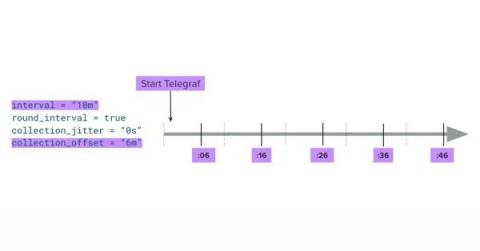
Many Telegraf and InfluxDB users often spend a lot of time finding that perfect balance of getting the data they want in while not writing in too much data that they have to deal with unnecessary data in their database. This blog post will give you a better understanding of Telegraf’s data collection settings and help you fine-tune your configuration.