Mailchimp
Not subscribed to OpsMatters Newsletter


If you are a software engineer like myself, two areas that I am not well versed in are networking and storage. Yes, my application has to communicate and yes my application needs to be deployed and requires some storage. Though that is usually the extent of my knowledge. Thanks to using elastic compute from cloud vendors in the last several years, the answer I usually give is “yes, attach 100gb of standard block storage per instance”.
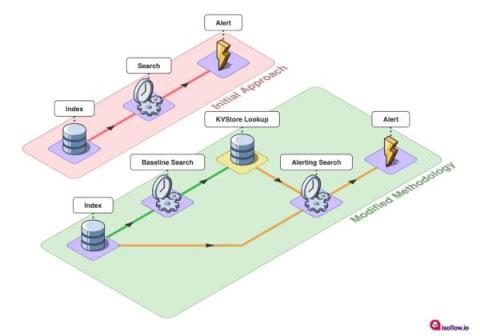
A common challenge that I see when working with customers involves running complex statistics to produce descriptions of the expected behaviour of a value and then using that information to assess the likelihood of a particular event happening. In short: we want something to tell us, "Is this event normal?". Sounds easy right? Well; Sometimes yes, sometimes no. Let's look at how you might answer this question and then dive into some of the issues it poses as things scale-up.
Stability and resiliency of cloud services are top of mind for organizations today. Whether rising to the challenge of a surge in pandemic-driven demand, or fire fighting an unexpected outage, you still have to support your own customers.
Back in 2007, when the VMware team was outlining the benefits of virtual desktop infrastructure (VDI), our presentations included a very specific use case: “global pandemic”. No, we didn’t have a crystal ball through which we could foresee the COVID crisis, more than a decade in advance. But even back then, we were looking at the security benefits of VDI, if global health crisis did suddenly force workforces to go remote.
Bare metal Kubernetes is a powerful set of technologies that builds on the best ideas behind the public and private cloud, yet abstracts away some toilsome aspects related to virtualisation management and networking. For operators and users, it provides significant benefits, making it easier and faster to ship and maintain complex, distributed applications.
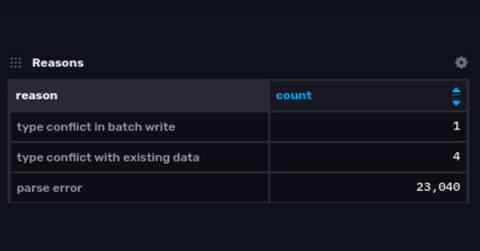
This article explores some of the ways that invalid data can be rejected when writing to InfluxDB and describes a new feature that makes it easier to know when and why that happens.
The Big SCOM Survey 2021 results are available and we are happy to see that at organizations the use of SCOM is still expected to grow according to more than half of the respondents. It is a survey executed by SCOMathon. But above all, our Citrix Ready Management Pack solution for monitoring Citrix Virtual Apps and Desktops scored as second-most used 3rd-party Management Pack of all 3rd-party Management Packs out there.
A fixed asset is a set of items intended to be used on a long-term basis for a company’s activity. In other words, they are assets that a company owns for a long time and that are not intended for resale. There are three main categories of fixed assets: tangible assets, intangible assets and financial assets.