Mailchimp
Not subscribed to OpsMatters Newsletter


If you've been familiar with FireHydrant previously, you've probably started to notice some strange things going on with the FireHydrant brand over the past several months. New pages? New content? New messaging? New colors? Yes, your eyes do not deceive you, we've been making some changes!
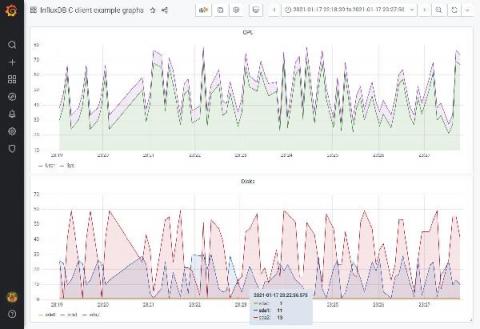
Currently, there is no official InfluxDB C language client library. Fortunately, I wanted to do exactly that for capturing Operating System performance statistics for AIX and Linux. This data capturing tool is called “njmon” and is open source on Sourceforge. So having worked out how and developing a small library of 12 functions for my use to make saving data simple, I thought I would share it. I hope it will prove useful for others.
It’s 2021 and somehow, I’m still trying to convince people that content is one of the biggest revenue drivers there is. Back in 2017, there was an influx of “content is king” and “why content is important” blogs on LinkedIn and Medium, but it seems little notice has been taken in the years that have followed.
Network administrators are responsible for the day-to-day operation of computer networks at organizations of any size and scale. Their primary duty is to manage, monitor, and keep a close watch on the network infrastructure to prevent and minimize downtime. Managing a network includes monitoring all the network components, including Windows devices. In any Windows network, the desktops, servers, virtual servers, and virtual machines (VMs), like Hyper-V, run on the Windows operating system.
We are in an age where organizations are completely dependent on their technological infrastructure to perform a majority of their business operations. Their IT assets form the backbone of their service delivery.