Mailchimp
Not subscribed to OpsMatters Newsletter


The first two posts in our compliance blog series focused on managing compliance through automation. In this third post, we take a step back to explore a more foundational — but no less important — topic: What’s the difference between compliance and security? Is compliant infrastructure secure infrastructure? People often talk about compliance and security as though they’re one and the same.
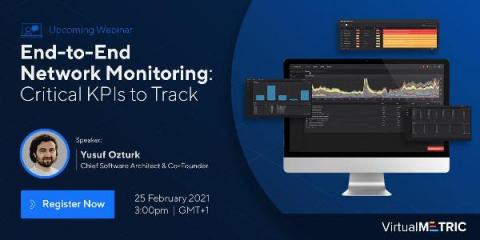
The IT network stays at the foundation of all the operations and data transfers within your business. Unreliable network or problems with the network performance may have a severe impact on your business. Running a business requires a robust and secure network, that managed effectively to meet all the necessary performance and security goals. The standard network monitoring is not enough in the digital transformation era.
At LogicMonitor, we deal primarily with large quantities of time series data. Our backend infrastructure processes billions of metrics, events, and configurations daily. In previous blogs, we discussed our transition from monolith to microservice. We also explained why we chose Quarkus as our microservices framework for our Java-based microservices. In this blog we will cover.
For those of you who aren’t familiar with AWS CodePipeline, it’s a continuous integration and continuous delivery (CI/CD) framework that enables application development teams to deliver code updates more frequently and reliably. You may have also heard it being called a CI/CD or DevOps pipeline. These pipelines have always traditionally been used to deploy the components of a certain application whenever new code in “checked-in”.
Zero Trust security. Some would say it’s the latest and greatest buzzword and this disposition is understandable given the amount of jargon introduced into the Information Technology market each year. With vernacular being used interchangeably like “AI,” “Machine Learning,” and “Deep Learning,” these words get stripped of their real significance.