Operations | Monitoring | ITSM | DevOps | Cloud

Latest posts

Splunk: The AIOps Advantage: Advance Your AIOps Approach with Splunk

IT departments are facing new challenges and opportunities to create value daily. For teams with a modern approach to IT, these challenges can be exciting - for those relying on outdated technology, it can be somewhat daunting. Tools and tactics of the past aren't able to keep up with the demands facing IT today, leaving teams struggling to stay afloat. Once again, we're looking to help companies solve these problems through an AIOps approach.

Grafana: Introduction to distributed tracing

Agenda Description Come and learn about the basics of distributed tracing! In this webinar, we will review what tracing is and what questions it can answer, common open source options for tracing, and the basics of deploying Jaeger, a popular tracing system. In the demo, we will take a simple application, instrument it for tracing, and offload those traces to a Jaeger backend. Then we'll run a typical Loki search, retrieve the trace from Jaeger, and view the trace in Grafana.

Grafana: https://grafana.com/go/webinar/ama-session-torkel/?pg=blog&plcmt=body-txt

Join us for a live "ask me anything" (AMA) session with the creator of Grafana, Torkel Ödegaard, who will answer questions submitted by the Grafana community. Do you want to know... After registering, you will receive a confirmation email with a form to submit your questions. Ask him anything!

South Africa's GDPR: The POPI Act and it's impact on Desktop Central users

The Protection of Personal Information (POPI) Act puts South Africa’s data regulation standards on par with existing data protection laws around the world. It aims to protect personally identifiable information (PII), enforce individuals’ rights to privacy, and provide guidelines for lawfully processing sensitive information and notifying regulators and data holders in the event of a breach.

Monitor AWS GovCloud (US) with Datadog

Public sector organizations face a unique challenge when it comes to the cloud: how can they successfully migrate their operations while maintaining an air-tight, heavily regulated, massively distributed environment? To solve this problem, Amazon created the AWS GovCloud (US), two isolated Regions in the AWS ecosystem that are only accessible to US customers who meet strict security and compliance standards.

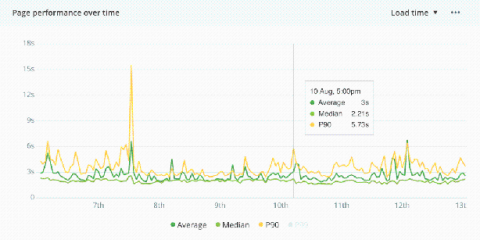
Visualize performance trends over time with the latest graph for RUM

Monitoring trends in application performance helps you identify poor performance and visualize the impact of performance optimizations you’ve made. To help you better monitor performance trends, we’ve released a new line graph now available across all performance details pages in Real User Monitoring.

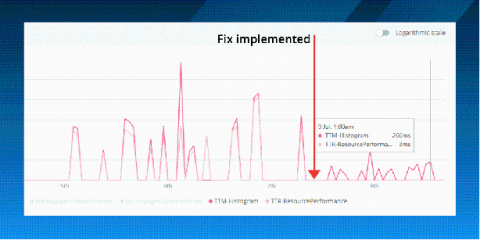
How we made an 83% performance improvement using Real User Monitoring

As applications evolve, we may start to lose visibility into why things are slow. Web apps often suffer in silence as customers are more likely to leave when they’re unsatisfied rather than reach out. Complex user flows, resource-intensive API calls, and an ever-growing codebase can all contribute to poor performance. This is why we don’t have scheduled performance days.

Manage Office 365 Outages With ServiceNow Integration

Enterprises continue to invest heavily in modernizing their IT infrastructure. That leaves network administrators and NOC analysts challenged with effectively monitoring an evolving digital landscape. The goal becomes to meet the service needs of customers and ensure the underlying infrastructure is resilient.

Should I Buy or Should I Build; or "When is Free Software Free"?

Pop quiz, hotshot. How much does it cost to build a self-hosted Kubernetes cluster? Quick, no conferring. If you thought the answer was “nothing”, go to the back of the class. According to distributed systems expert Cindy Sridharan, quoted in Cloud Native DevOps with Kubernetes, the answer is “one million dollars”: It takes well over a million dollars just in engineer salary to get Kubernetes up and running from scratch. And you still might not get there.