Mailchimp
Not subscribed to OpsMatters Newsletter


GitLab users will feel even more cunning 🦊 managing your issues directly from GitKraken. The GitKraken Git GUI now integrates with GitLab and GitLab Self-Managed Issues! Now there’s no need to leave the comfortable foxhole of your GitKraken environment to stay on top of your issues. Context switching is, after all, the enemy of an optimal workflow.
Whether you are new to the Cloud, mid-transition, or a professional at cloud or hybrid systems, no one likes being bothered with useless alerts. The options are simple: If you take the approach of ignoring the alert like a bad cold-call, you risk the chance of missing a critical alert and watching your system crash around you. No one likes to open their inbox to a few hundred alerts they have been ignoring.
If you’re a JavaScript developer there’s a very good chance you’ve heard of or use Vercel. In the small chance you haven’t, Vercel is this awesome platform that makes building and deploying Jamstack frameworks like Next.js incredibly fast and easy. Next.js is gaining in popularity with 51k stars on GitHub and it’s one of the most trusted stacks in the JavaScript world these days.
Many organizations use Kubernetes to quickly ship new features and improve the reliability of their services. Rancher enables teams to reduce the operational overhead of managing their cloud-native workloads — but getting continuous visibility into these environments can be challenging. In this post, we’ll explore how you can quickly start monitoring orchestrated workloads with Rancher’s built-in support for Prometheus and Grafana.
Holler is a messaging tech company that enriches conversations everywhere by creating and delivering useful, entertaining, expressive visual content to add texture and emotion to messaging environments. As the company has continued to grow, the engineering organization has scaled to meet the demand for its services. However, without a fully staffed Operations team, most of the engineers at Holler perform double duty across DevOps to keep the service performant for consumers.
When it comes to systems reliability, you wouldn’t normally think that unleashing additional chaos would actually be helpful, would you? As more engineering teams moved toward microservice-based architectures for cloud applications over the course of this past decade, many of them didn’t change their testing strategies.
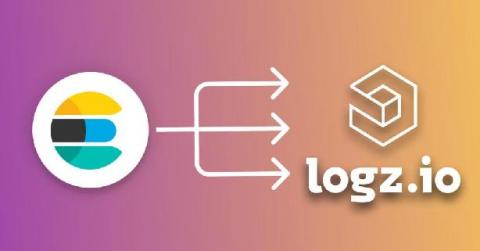
At Logz.io, we’ve built our Log Management solution on the ELK Stack because we know it’s what modern engineering teams prefer. It’s familiar, powerful, and integrates easily with other DevOps and cloud technologies. That’s what makes migrating from ELK to Logz.io a seamless process. This means current ELK users can easily transition to Logz.io. If you’re currently using ELK, you can ship the same data using exactly the same shipping mechanisms.