Mailchimp
Not subscribed to OpsMatters Newsletter


As part of the re-affirmed commitment to customers as announced on January 30, Ivanti launched an Independent Business Unit (IBU) consisting of proven solutions with a large customer following (dare I say: fans?) that deserve some TLC. One of the solutions managed by this dedicated team is Ivanti Device & Application Control, powered by HEAT. So, where is Ivanti Device & Application Control at these days? The dedicated team hasn’t been sitting still.
IT industry research has repeatedly shown that DevOps-oriented teams that can ship software quickly and effectively routinely outperform their slower counterparts in terms of company profitability, market share, and just about every competitive business metric that matters. That sort of success comes from restructuring teams in ways that empower them to move faster and get closer to their customers.
Given the complexity of large enterprise environments, coupled with the diversity of the vendor landscape, there is no single, agreed-upon “best” way to buy security. The battles continue between CAPEX or OPEX, net-30 or net-90, annual or multi-year, perpetual or subscription. One thing we do know, however, is that all too often the consumer pays for something he or she does not use.
There are dozens of great languages to learn. Today we’ll be breaking down the differences between two of the best: PHP vs Python. Which one is best for your application? Which is going to give you the best return on your development time? We’ll pit these two head-to-head and find out which is the best choice for you.
My computer programming teacher had always told me that 10% of our time is spent developing 90% of our application, and the other 90% of our time finishing the last 10% of our project. Even with a good project plan and a concept that makes logical sense, most of our time will be consumed with fixing errors. Moreover, with JavaScript, our application can run without obvious errors preventing it from being run, so we have to employ several techniques to make sure everything is running smoothly.
Customer experience is a key factor in competitive differentiation in the digital economy. The online business model has changed, and today, the focus has shifted from brands to customers. It would not be an exaggeration to say that customer experience plays a central role in any business model.
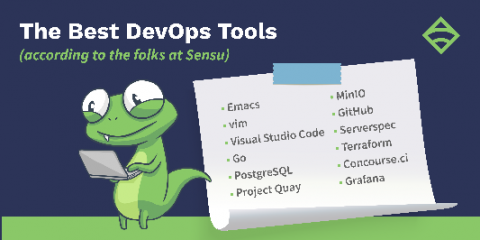
Because Sensu is a tool made for (and by!) operators, I wanted to share our own favorite tools in the DevOps ecosystem (aside from Sensu, of course!). I surveyed the fine folks who work at Sensu on what their favorite DevOps tools are, and why. And while we don’t always agree on a specific tool (everyone has their own favorite text editor), it’s safe to say that open source is a constant theme. Read on to learn about our tools of choice for editors, programming, storage, IaC, and more.
A quick checklist for deciding when delegated development is right. Sprawl and lack of governance continue to keep Enterprise Architects up at night. Unfortunately, their efforts to enforce logical control over application strategy and building often just frustrate departments needing an immediate solution to a problem. Rogue IT tools pop up and security risk increases. A 2019 Forbes Insights survey found that 1 in 5 organizations have experienced a cyber event due to an unsanctioned IT resource.
The financial function is one of the more respected, highly-trained, and revered departments of any business. Accountants (both management and chartered), actuarial professionals, and financial professionals of all disciplines generally take on several years of post-graduate studies that put them in line for a potential slot in C-suite management, if they choose to pursue that course.