Mailchimp
Not subscribed to OpsMatters Newsletter


Logging is a data collection method that stores pieces of information about the events that take place in a computer system. There are different kinds of log files based on the kind of information they contain, the events that trigger log creation, and several other factors. This post focuses on log files created by the three main operating systems--Windows, Mac, and Linux, and on the main differences in the ways to access and read log files for each OS.
At LogDNA, we’re all about speed. We need to ingest, parse, index, and archive several terabytes of data per second. To reach these speeds, we need to find and implement innovative solutions for optimizing all steps of our pipeline, especially when it comes to storing data.
My career as a software engineer started in 2007 at Purdue University. I was working in the Linux kernel and researching how data was shuffled between the kernel and the user application layers. This was happening in huge clusters of machines that all talked to each other using OpenMPI — how supercomputers, like those at Los Alamos National Labs, operate to perform their enormous calculations around meteorology, physics, chemistry, etc.
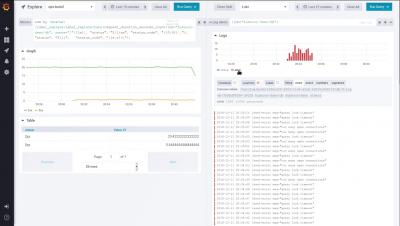
This blog post is a companion piece for my talk at https://devopsdaysindia.org. I will discuss the motivations, architecture, and the future of logging in Grafana! Let’s get right down to it. You can see the slides for the talk here.
Interested in Learning the Elixir language? Join us in this entertaining Elixir tutorial and overview. This post will spin a yarn about an ambitious wizard, Alatar, and his quest to revamp a magic web storefront using Elxir. We will observe Alatar decide on Elixir as his development platform, and follow him on the journey of learning and implementation. Along the way, he will utilize several frameworks written for Elixir (including Phoenix, Ecto, and Poison).
We've been fairly public about the amount of testing we have for Oh Dear!. Freek has been showing bits and pieces on his Twitter to show the extent of that effort. Having a huge test suite is nice, but integrating it into your development workflow is even better.