Operations | Monitoring | ITSM | DevOps | Cloud

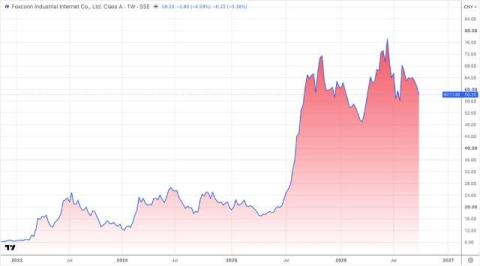
From iPhones to AI Servers: Foxconn's Second Act

The AI boom continues to redistribute revenue within the technology industry. If previously the main investment interest was focused on chip manufacturers and model developers, now companies that serve the infrastructure supporting this growth are becoming increasingly prominent. One of the main beneficiaries has been Foxconn, which is gradually transforming from the largest assembler of Apple devices into one of the key suppliers of server hardware for artificial intelligence.


HAProxy Enterprise WAF protects against PHP2Shell (CVE-2026-109618, CVE-2026-109619)

On October 20th, 2026, the PHP Security Team issued an advanced notice and security advisory disclosing two critical vulnerabilities (CVE-2026-109618 and CVE-2026-109619), both rated CVSS v4.0 9.2, affecting PHP installations.

How to Troubleshoot Intermittent Network Issues After They Happen

One of the most frustrating challenges I faced as a network engineer was troubleshooting problems that had already disappeared. A user would call and report that an application was performing terribly. A site would become unusable for several minutes. Voice calls would break up. File transfers would suddenly slow to a crawl. Then, by the time I started investigating, everything would be working normally again.

GCP Out of Capacity? How to Offload Workloads to AWS Without Running a Second Platform

Google says it is compute constrained, and GKE teams now hit ZONE_RESOURCE_POOL_EXHAUSTED on CPU machine families, not only GPUs. Here is what the error means, what Google recommends, what AWS can and cannot offer, and how to offload workloads from GCP to AWS with one platform instead of two. Romaric founded Qovery to make Kubernetes accessible to every engineering team. He writes about platform strategy, developer experience, and the future of cloud infrastructure.

Where to Find GPU Capacity in 2026: Hyperscalers, Neoclouds and Regional Clouds

Google, CoreWeave and Nebius all say they are short of GPUs. Here is where capacity still exists in 2026, which GPU clouds offer managed Kubernetes, how to connect a second cloud to your first one, and how to run GPU services on all of them from one platform. Romaric founded Qovery to make Kubernetes accessible to every engineering team. He writes about platform strategy, developer experience, and the future of cloud infrastructure.

Why Was an OpenAI Engineer Hiding a Recording Device?

An OpenAI engineer was arrested after a hidden recording device was discovered inside an executive conference room. Who was he trying to record, and who was the information intended for? Martin Reynolds and Adam Arellano break down one of the strangest AI security stories of the year, along with three major cybersecurity headlines. Microsoft just released more than 1,400 security fixes in a record-breaking Patch Tuesday. Is AI finding vulnerabilities faster than companies can actually fix them?

Why 76% of AI agent pilots stall, and how your Agentic ITOps pilot can avoid the same fate

The debate is no longer whether AI belongs in ITOps; it’s about how quickly it can be implemented, how to measure it, and who’s accountable when it acts. And although IT leaders across industries are scrambling to integrate agentic AI into their operations, those deployments are facing serious challenges. A new Harris Poll survey of more than 300 U.S. data and AI decision-makers puts a number on the problem.

CertKit now has 86 built-in deployment templates

There are lots of ways to get a certificate. Getting it onto your Cisco ISE, IBM i, or WatchGuard VPN is the hard part. We keep making that easier. Since July, CertKit has added 51 new deployment templates, more than doubling the library to 86. Each platform has a built-in deployment template, and most have a deployment guide for the setup details. Setup is just picking a certificate and setting a few variables.

Monitoring the Monitor: When One of Our Uptime Vendors Went Quiet for 27 Hours

DNS Check watches its own infrastructure with several layers of monitoring, including DNS Check itself and third-party uptime monitoring services. One of those vendors polls a private health endpoint on our servers every five minutes, from probes around the world. That endpoint runs a set of internal checks (disk space, mail delivery, background job queues, DNS resolvers, and more) and returns an error if any of them fail. If it errors or stops responding, the vendor alerts us.