Operations | Monitoring | ITSM | DevOps | Cloud

The latest News and Information on DevOps, CI/CD, Automation and related technologies.

The golden path: security that works because it's the easy path

A golden path for dependency management isn't a policy document – it's a preconfigured private registry with upstream proxies covering every ecosystem your teams use, set as the default. Developers don't opt into security; they get it automatically by using the standard toolchain. The alternative is teams configuring their own controls, producing inconsistent postures and compounding risk across the org. If the secure path requires extra steps, developers will route around it. Make it the easiest option and the policy enforces itself.

Walkthrough: Puppet System Hardening Assessment

Is your infrastructure as secure as you think it is? In this walkthrough, see how aSystem Hardening Assessmenthelps organizations identify security gaps, uncover configuration risks, and prioritize remediation efforts across critical systems. You'll learn how teams can evaluate their environment against security best practices, gain visibility into potential vulnerabilities, and take actionable steps to strengthen their overall security posture.

ACP vs MCP: What's the difference for agentic coding?

An AI coding agent holds many conversations at once. Not only is the user prompting it, the agent also talks to the IDE, showing diffs and asking before it touches a file. At the same time it talks to tools, pulling a failing build or querying a database. Two open protocols standardize those conversations. This guide compares ACP vs MCP in practical terms: what each protocol does and when each applies. ACP (Agent Client Protocol) connects a code editor to an AI coding agent.

Cloud repatriation strategies: From public dependency to hybrid flexibility

For years, "move everything to the cloud" was the default. But the economics have shifted. Join Russell Smith to explore why enterprises are reconsidering their cloud strategies, and how modern private cloud platforms are changing the game. We'll cover the real costs of public cloud lock-in, achieving feature parity without the price premium, and how to navigate today's hardware constraints, especially if you've got existing infrastructure assets that can still deliver value.

To learn and improve, we cannot be afraid to fail

“Deployment stress doesn’t just come from high-profile public outages. It often starts much earlier, when a fear of failure seeps into team culture.” Rob Richardson, Software Craftsman Rob certainly knows the stress and embarrassment of public deployment failures. "But overall" he reflects, "I’ve had more stress in my career from internal failures.

Cloud repatriation strategies: From public dependency to hybrid flexibility

The phrase "cloud first" dominated IT strategy for the better part of a decade. It was gospel, practically unchallengeable, and for a lot of organizations, it was the right call. But something shifted between 2024 and 2026, and it shifted fast. Bills stopped being defensible. Vendor pricing imploded. Sovereignty stopped being a compliance checkbox and became a procurement requirement.

"SQL Server isn't slow - it's doing exactly what you told it to do" - a chat with David Klee

In this episode of the Redgate Simple Talk podcast, Kellyn Gorman is joined by veteran Data Platform Architect, David Klee, to talk all things SQL Server performance tuning. Learn why "it's slow" is the least useful thing anyone can tell a DBA, why you need a real baseline before diagnosing anything, and why a database is never 'just' a database - plus much more. Thanks to David for his time.

OpenAI API cost calculator: estimate your GPT spend before it estimates you

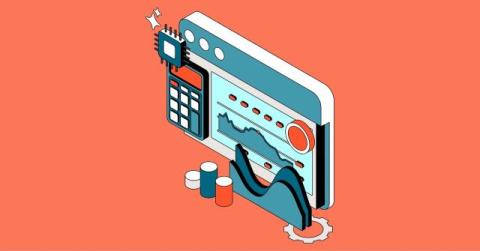
This OpenAI API cost calculator (also an AI inference calculator for o3/o4-mini thinking tokens) estimates your monthly OpenAI API pricing bill from three inputs: model, request volume, and average tokens per request. Toggle between standard, batch, and cached pricing and get your number in seconds. It also shows what the same workload costs on Claude and Gemini. For the full per-model rate card, see CloudZero's OpenAI API pricing guide.