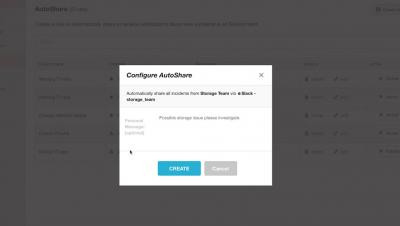
Tips for Modern NOCs - Alleviating Incident Routing Bottlenecks
Those hundreds of low priority incidents waiting in your que harbour great risks for outages. Learn how to get rid of your incident routing bottlenecks.


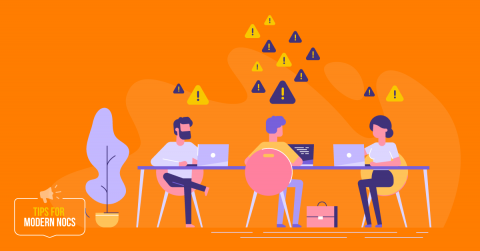
Critical and sev1 incidents are always a priority, but what about those dozens and often hundreds of lower priority ones that often sit in a queue waiting for a first response engineer to get to them? Do you find that no matter how much effort your team puts into minimizing the number of queued incidents, their number always seems to grow? If this sounds familiar – this blog is for you.
As 2019 comes to an end, OnPage would like to re-inform MSP teams about the value and importance of offering a 24×7 support service. Twenty-four seven support ensures that client issues are quickly resolved by an after-hours support team. Though 24×7 support is a must-have offering, MSPs must first re-work their internal workflows and policies, ensuring that after-hours servicing is a pain-free venture.
Recently, I wrote about an IDC business value study PagerDuty commissioned and shared some of the results from the research. In summary, after in-depth interviews with eight enterprise customers, IDC applied its proven business value methodology to the aggregated results of those interviews and found that enterprise customers were averaging a three-year return-on-investment (ROI) of 731% and a payback period (break-even point) on their investment in just 4.3 months.
Aquafin is a Belgian company with over 1,000 employees that was established by the Flemish Region in 1990 for the purpose of expanding, operating and pre-financing the wastewater treatment infrastructure in Flanders. Aquafin collects household wastewater from the municipal sewers and transports it to wastewater treatment plants, where it is treated in accordance with European and Flemish standards.
When considering the state of critical incidents in 2019 – it’s no surprise that looking ahead to 2020, CISOs have one of the organization’s most challenging and stressful jobs. During the first half of the year alone 4.1 billion records were compromised, and the average cost of a data breach is now estimated at $3.92 million.
Start your engines. The holiday season has officially begun! With the upcoming shopping frenzy surrounding Black Friday and gift buying, it is one of the most important times of the year to avoid glitches like the ones below.
There’s a solid rationale behind replacing antiquated technology, as they fail to keep pace with how the healthcare environment is evolving. One such invention is the good, old pager. Recently, the U.K.’s National Health Service Trust (NHS) was on the radar when the organization’s sensitive medical data was hacked by an individual in North London. The malicious party intercepted radio waves, converting it into legible text on his computer monitor.
The number and variety of AIOps benefits far outweigh the cost of implementation. Research from EMA highlights that 81% of enterprises have received value that exceeds costs.
In order to keep digital services running around the clock, teams need to be able to solve problems faster—or, ideally, in real time. Many vendors claim to provide value and help organizations bolster their digital operations management.