Operations | Monitoring | ITSM | DevOps | Cloud

The latest News and Information on Cloud monitoring, security and related technologies.

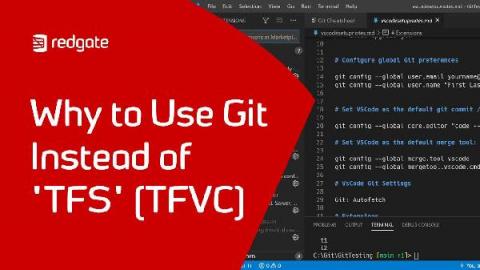
Why to Use Git Instead of "TFS" (TFVC)

One question we frequently hear from customers using the Microsoft stack is, “should I use Git or TFS?” The question requires a little decoding due to the way that Microsoft has shifted their brands over time. Here’s some background. Many people still refer to this as “TFS,” regardless of the version they are using. TFVC used to be the default type of repo for TFS projects.
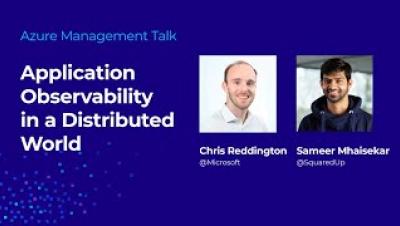

Azure Management Talk: Application Observability in a Distributed world

In this session, Chris Reddington will provide an overview of Application Insights and how it slots into the wider Azure Monitoring ecosystem. We will explore Alerts, Metrics, Queries, Dashboards, Workbooks and more, and how Application Insights can bring clarity to a distributed cloud deployment.

Understanding the consumer side of Azure Event Hubs (Checkpoint, InitialOffsetProvider, EventProcessorHost)

Azure Event Hubs are cloud-scale telemetry ingestion from websites, apps, and devices. Because of the tremendous event handling capacities, IoT architectures also consume the Azure Event Hubs. Thus, we talk about handling millions of events per second. With the implementation of multiple partition architecture behind the scenes, Azure Event Hubs are highly scalable to receive events from hundreds of sources.

AWS CloudFormation Templates & Best Practices

What if I told you that a text file could help you tackle the normally tedious and time-consuming task of setting up and managing your AWS infrastructure? Good news. It’s actually easy to do with an AWS CloudFormation template. A typical AWS infrastructure can consist of numerous resources that might need to be managed across different accounts and regions. Setup is often a manual process that can be overwhelming to maintain.

Increasing limits for three key Cloud Monitoring features

Cloud Monitoring is one of the easiest ways you can gain visibility into the performance, availability, and health of your applications and infrastructure. Today, we’re excited to announce the lifting of three limits within Cloud Monitoring. First, the maximum number of projects that you can view together is now 375 (up from 100). Customers with 375 or fewer projects can view all their metrics at once, by putting all their projects within a single workspace.

How to Identify the Zoom Data Center Location on AWS Infrastructure

Zoom leverage AWS’s global infrastructure, storage, content distribution, and security to deliver its service and store information securely in AWS data centers around the world. This means that when you’re looking to monitor your Zoom performance, it’s important to know how to identify which AWS data center location your Zoom application is using. Keep reading to find out how.

Troubleshooting services on Google Kubernetes Engine by example

Applications fail. Containers crash. It’s a fact of life that SRE and DevOps teams know all too well. To help navigate life’s hiccups, we’ve previously shared how to debug applications running on Google Kubernetes Engine (GKE). We’ve also updated the GKE dashboard with new easier-to-use troubleshooting flows. Today, we go one step further and show you how you can use these flows to quickly find and resolve issues in your applications and infrastructure.

Will Azure Blob Storage Rule the Unstructured Data Storage Space?

2020 was indeed challenging for Kovai.co still had great learning! One of them is what I am sharing with the community through this blog. For enterprises like us, worldwide work from anywhere became the new reality. We had to move towards a cloud-native world where secure data storage and effective remote management of IT infrastructure were of supreme importance.

Finance: Why Getting Answers From Engineering About Your AWS Bill Is So Difficult

It’s no secret that AWS bills are confusing. But it’s particularly difficult for the team who actually writes the check to Amazon for hundreds of thousands or millions of dollars — yet has never personally seen what the inside of the AWS portal looks like (and probably never will).

10 Ways to Protect Your Mission-Critical Database

As Werner Vogels says: “Everything fails all the time.” Data is the new oil. We rely on it not only to make decisions but to operate as a business in general. Data loss can lead to significant financial consequences and damaged reputation. In this article, you can find ten actionable methods to protect your most valuable resources.